Loading
Insulation slows heat down. Air sealing stops it from bypassing your insulation entirely. If your bills are high and your home never quite reaches temperature, gaps in the building envelope are almost always a major part of the problem.
Air sealing services in Tallahassee find every crack, gap, and hidden opening in your home's shell and close them permanently - most single-family homes are completed in one to two days, and the results are measured before and after with a blower door test so you can see the actual improvement.
The ENERGY STAR program estimates the average home leaks so much air through small cracks and gaps that it is roughly equivalent to leaving a window open year-round. In Tallahassee, where your cooling system runs for six or more months a year, those gaps are costing you money every single day. Homes built before 1990, which make up a large share of Tallahassee's housing stock, are especially prone to significant air leakage because tight-building practices simply were not standard at the time.
Air sealing and insulation are related but different. Insulation slows heat from moving through walls and ceilings. Air sealing stops air from moving through gaps entirely. Doing one without the other leaves results on the table. If your home also has under-insulated walls, pairing air sealing with basement insulation or wall insulation in the same project delivers the most complete solution.
If your cooling costs jump significantly from May through September and feel out of proportion to your home's size, air leakage is often the culprit. Tallahassee's long, hot summers put enormous pressure on air conditioning systems, and a leaky home forces your system to run almost constantly to keep up.
If one bedroom, a bonus room, or a space above the garage always feels warmer than the rest of the house with the AC running, there is likely a gap nearby letting hot air in. This is especially common in older Tallahassee homes where additions were built without careful attention to sealing the new space.
Hold your hand near an electrical outlet on an exterior wall on a hot day. If you feel warm air coming through, that outlet connects to a gap running all the way to the outside. The same test works around attic hatches, recessed light fixtures, and trim around pipes under sinks.
Tallahassee's humidity is relentless from spring through fall, and when warm, moist outdoor air finds its way into a cooled attic space, it can condense and create conditions for mold and mildew. A musty smell in a bedroom or a ceiling stain that does not trace to a roof leak is a sign that humid air is getting in somewhere it should not.
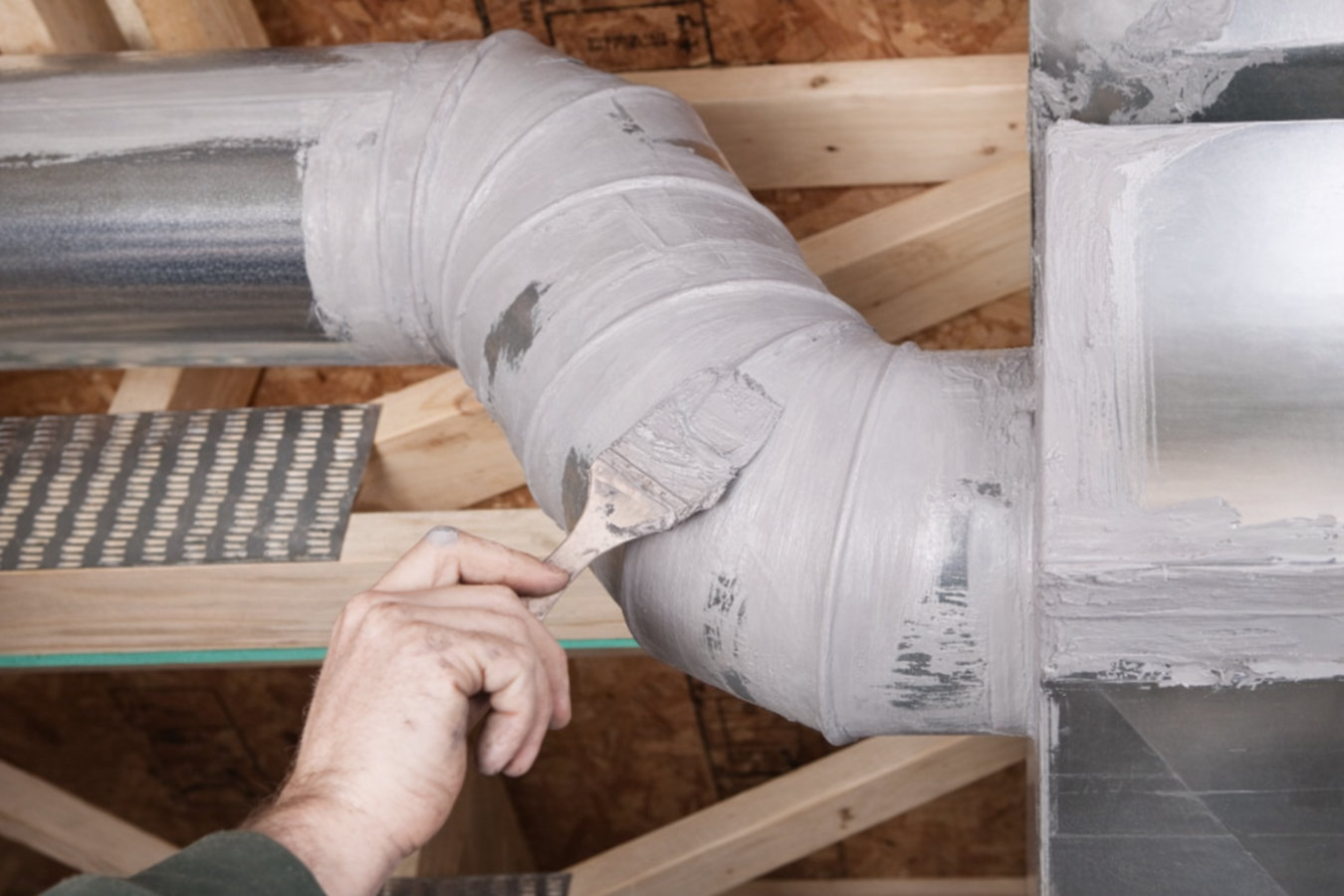
We perform comprehensive air sealing throughout the building envelope, starting in the attic where most homes lose the greatest share of conditioned air. Our process begins with a blower door test to measure how leaky your home is, then our technician works through the attic floor, crawl space, and accessible wall areas, sealing penetrations with foam and caulk. We run the test again at the end so you see the actual before-and-after improvement in measurable numbers.
For homeowners whose homes need both air sealing and new insulation, we frequently combine air sealing with attic air sealing and basement insulation in the same visit. Addressing both the air barrier and the thermal barrier together produces more noticeable results than either one alone, and doing them in a single mobilization reduces disruption and overall cost.
Every project starts with a free on-site visit. We walk through your home, identify the most significant problem areas, and explain what we recommend and why before you decide anything.
Best for homeowners who want a comprehensive solution that addresses the attic, walls, and crawl space in a single project.
Best for homes where the primary air leakage is through ceiling penetrations, attic hatches, and gaps at the top of exterior walls.
Best for homes where moisture and outdoor air are entering from below, often combined with crawl space insulation.
Best for homeowners who want to know exactly how leaky their home is and where the biggest problems are before committing to any work.
Tallahassee sits in a humid subtropical climate zone where summer temperatures regularly climb into the low 90s and humidity stays high for months at a time. When hot, humid outdoor air seeps into a cooled home through gaps and cracks, it does not just make the house feel uncomfortable - it can condense inside walls and attic spaces and create conditions where mold grows. For Tallahassee homeowners, air sealing is not just about saving money on electricity; it is about protecting the structure of the home itself.
Many neighborhoods in Tallahassee - including older areas near downtown, Midtown, and the university district - have homes built in the 1950s through 1980s, before builders paid much attention to sealing homes tightly. These homes often have significant gaps around plumbing, electrical wiring, and attic hatches that have never been addressed. The Building Performance Institute certifies energy professionals in the diagnostic and air sealing methods that identify and close these problem areas systematically.
We serve homeowners across the Tallahassee metro and surrounding communities, including customers in Panama City, FL, Valdosta, GA, and Dothan, AL. Fall is typically the best time to schedule - shorter wait times, more flexibility, and the work is done before the next summer cooling season begins.
We ask about your home's age, size, and what has been prompting the concern. We respond to all inquiries within one business day and can usually schedule an initial visit within a few days to a week.
We run a fan test to measure how much air your home is losing and walk through it with you to find where the biggest problems are. This takes about an hour and is free of charge. You get a clear picture before committing to any work.
We explain what we found and prioritize the areas that will make the biggest difference for your comfort and bills. You receive a written estimate before any work begins. If a permit is required, we handle it.
The technician seals gaps with foam and caulk, starting in the attic and working through the rest of the home. Most jobs are done in a single day. We run the blower door test again at the end so you see before-and-after numbers.
Free blower door test and home assessment. Written estimate before any work. Response within one business day.
(850) 518-3745Every air sealing job is performed by an experienced local crew, with documentation of the work provided before it begins, not after a problem arises.
We measure your home's air leakage before we start and again after we finish, so you have a real number showing the improvement. If a contractor cannot offer that, it is worth asking why.
We work throughout the Tallahassee metro and surrounding region - including Leon County and communities across the Florida Panhandle and South Georgia. We know how homes here perform and what they need.
We respond to all inquiries within one business day and schedule free in-home assessments before giving you any price. Air sealing cannot be quoted accurately without walking the home first.
We are based in Tallahassee and focused on this region. We know how older homes here are built, how the climate stresses them, and what the permit process requires. Every air sealing job comes with measurable results, and if something is not right after the work is done, we come back and fix it.
Basement and crawl space insulation paired with air sealing addresses the below-grade air and moisture entry points that ceiling-level sealing alone cannot reach.
Learn moreAttic-specific air sealing targets the ceiling penetrations and framing gaps where the largest share of conditioned air escapes in most Tallahassee homes.
Learn moreFall and winter slots fill fast. Call today or request a free estimate online and we will respond within one business day, so the work is done before you need your AC most.