
Loading
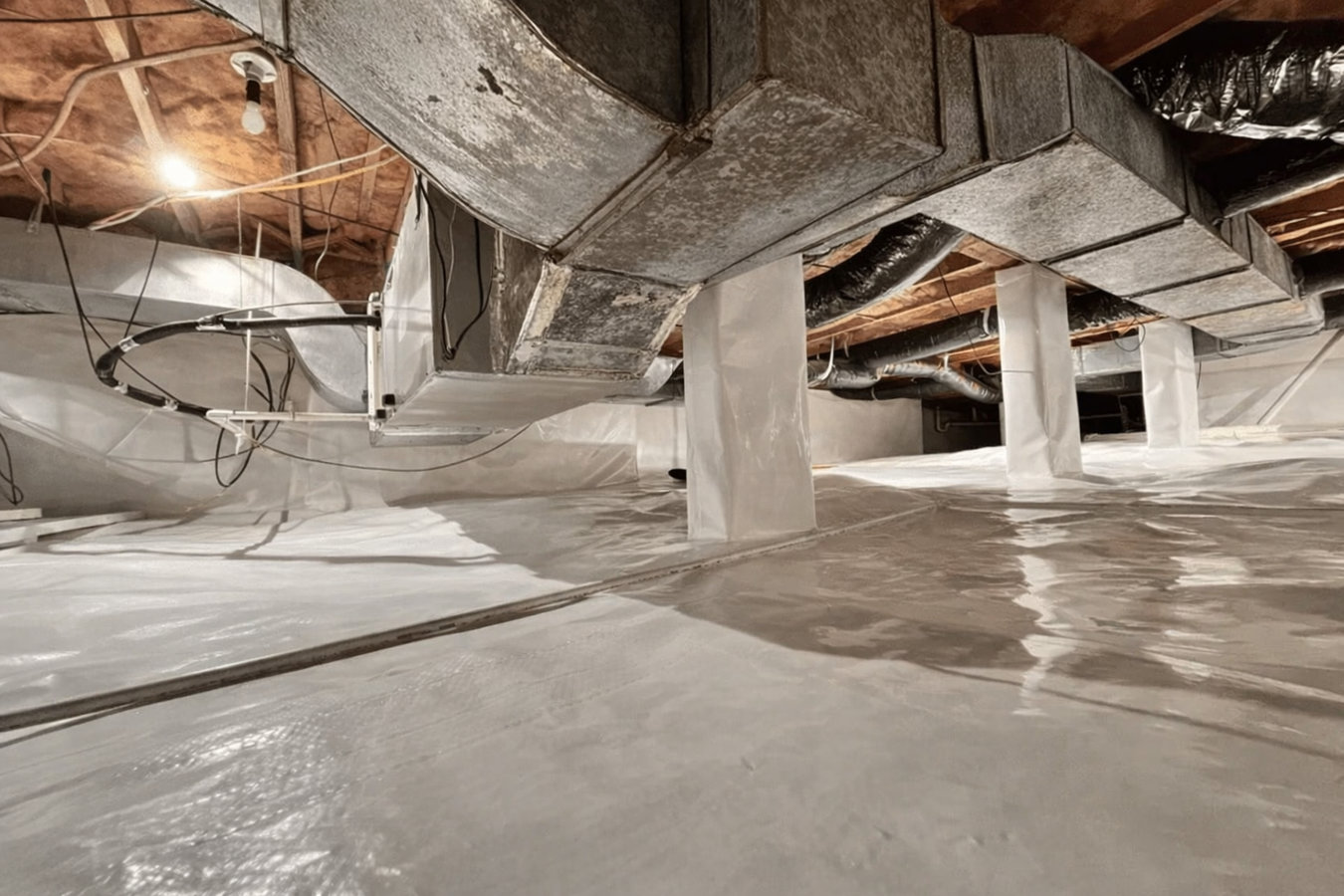
Tallahassee's soil stays wet for weeks after summer storms. Without a sealed barrier, that moisture rises through your crawl space into your floors and framing every single day. We stop it before it becomes a repair bill.
Crawl space vapor barrier installation in Tallahassee lays heavy-duty plastic sheeting across the entire dirt floor, sealing it against the foundation walls and around every pier and pipe so no soil is exposed - most jobs are completed in one to two days, and the barrier is effective immediately.
The soil under your Tallahassee home holds moisture for a long time after rain. Without a barrier, that moisture rises continuously into the wood above, where it silently weakens floor joists, feeds mold, and makes your crawl space a more hospitable environment for termites. The EPA's guide to moisture and mold identifies damp crawl spaces as one of the leading causes of indoor mold problems in homes - and in Leon County's climate, a crawl space without protection is almost always a damp one.
A vapor barrier and proper crawl space insulation are related but separate steps. The barrier addresses moisture rising from the ground. Insulation addresses heat moving through the floor above. If your home also needs insulation below the floor, pairing this work with vapor barrier installation that includes full wall coverage delivers the most complete moisture solution in one visit.
If wood floors flex slightly when you walk across them, or certain spots feel softer than they used to, the subfloor or floor joists below have likely absorbed moisture over time. In Tallahassee's humid climate, this damage develops gradually without any single obvious water event. It is a clear signal that something is happening underneath your home that needs attention before it becomes structural.
A persistent earthy or musty smell inside your home, especially in rooms closest to the ground floor, is one of the most common signs of a crawl space moisture problem. In Tallahassee, this smell often gets worse after the summer rainy season when the soil stays saturated for weeks at a time. If the smell comes and goes with the weather, the crawl space is almost certainly the source.
If anyone has looked into your crawl space and noticed water droplets forming on pipes, metal ducts, or the underside of the floor, humidity levels below your home are high enough to cause active condensation. This is a common finding in Tallahassee homes during summer, and it means moisture is present in a space that should stay consistently dry.
Many older Tallahassee homes in neighborhoods like Levy Park, Myers Park, and the areas around Apalachee Parkway were built without moisture barriers in the crawl space. If your home is in this age range and has no record of crawl space work, there is a reasonable chance either no barrier exists or the original one has deteriorated over the decades. A quick inspection will tell you what you are actually working with.
We install heavy-duty vapor barriers that hold up to foot traffic and Tallahassee's persistent ground moisture - not the thin material that tears after a single maintenance visit. Every installation covers the entire crawl space floor, runs up the foundation walls, and seals around every pier, post, and pipe so no soil is left exposed. Seams are overlapped and taped so moisture cannot sneak back in through gaps.
For homes with more advanced moisture problems, we also offer full crawl space encapsulation through our vapor barrier installation service, which includes wall coverage, vent sealing, and dehumidifier placement where needed. Homeowners whose crawl spaces are also under-insulated can combine barrier work with crawl space insulation in the same visit, addressing both moisture and thermal performance at once.
Every project starts with a free on-site crawl space assessment. We enter the space, document what we find, and walk you through our recommendation before you commit to anything.
Best for homeowners who need a sealed crawl space floor and have no signs of advanced moisture damage or active standing water.
Best for homes with higher moisture pressure, especially older properties with open foundation walls and no prior moisture protection.
Best for crawl spaces that also receive humid air through vents or have persistent high-humidity readings even after the ground is sealed.
Best for homeowners who want to address both moisture and heat loss through the floor in a single project visit.
Tallahassee averages around 65 inches of rain per year, most of it falling between June and September. After a heavy storm, Tallahassee's red clay soil absorbs water slowly and holds it near the surface for days - sometimes weeks. The ground under your home stays wet long after the yard looks dry, and that sustained moisture moves upward through any unprotected crawl space floor. A vapor barrier is not a precaution in this climate; it is a baseline defense against conditions that are present most of the year.
A significant share of Tallahassee's housing stock was built between the 1950s and 1980s, including many homes in neighborhoods like Betton Hills, Myers Park, and Midtown. Homes from that era were built without the moisture management standards that are common today, and many have open dirt crawl spaces with no protection at all. The U.S. Department of Energy recommends sealed crawl spaces in humid climates like Tallahassee's because open, vented crawl spaces regularly bring in more moisture than they release when outdoor humidity is high.
We work on homes across the Tallahassee metro and throughout Leon County, including Tallahassee, Thomasville, and Valdosta. We know the soils, the housing ages, and the climate conditions that shape what your crawl space actually needs.
We ask a few basic questions about your home and schedule a free in-person assessment. We reply to all inquiries within one business day - no pressure, no obligation on the first visit.
A technician enters your crawl space and documents what is there - existing moisture protection, soil conditions, signs of mold or pest activity. This typically takes 30 to 60 minutes. You get a clear explanation of what we found before we leave.
Your written quote specifies the square footage covered, the material type and thickness, what prep work is included, and whether a permit is needed. No surprises on the day of installation.
The crew clears the space, installs the barrier with fully taped seams and sealed edges, and does a final check to confirm no soil is exposed. The barrier is effective immediately, and you receive documentation of the completed work.
We come out, take a look, and give you a clear written quote - no pressure, no obligation. Most homeowners are surprised by how manageable the work actually is.
(850) 518-3745Every vapor barrier project is performed by an experienced local crew. You receive written documentation of the scope, material, and warranty before we start, not after.
We use heavier-duty sheeting designed to hold up to foot traffic and Leon County's persistent ground moisture - not the thin material that tears after a single maintenance visit. We tell you exactly what we are installing before the job starts.
We work throughout Leon County and the wider Tallahassee metro. We know how homes here are built, what the soil does after a hard rain, and why older neighborhoods like Betton Hills and Midtown have different crawl space conditions than newer subdivisions.
We respond to all inquiries within one business day and schedule free in-person assessments before giving you any price. Vapor barrier work cannot be quoted accurately without seeing your crawl space first.
The combination of local knowledge, proper materials, and transparent documentation is what separates a vapor barrier installation that holds up for 20 years from one that starts peeling away the first time someone crawls through for a plumbing repair. We have been working on Tallahassee homes since 2022, and we back every project with a written scope and material warranty so you know exactly what you paid for. The Insulation Contractors Association of America sets industry standards for this type of work, and we follow them on every job.
Full-system vapor barrier and encapsulation options for homeowners who want wall coverage and dehumidification alongside ground-level moisture control.
Learn moreInsulating the crawl space floor joists and rim joists works best when the space below is already sealed against ground moisture with a properly installed barrier.
Learn moreTallahassee's rainy season does not wait - call now or submit your information and we will be in touch within one business day to schedule your free assessment.