Loading
Your existing home can be properly insulated without a major renovation. We add attic, wall, and crawl space insulation to homes throughout Tallahassee so you stop losing energy every month through a poorly sealed envelope.
Retrofit insulation in Tallahassee adds blown-in, spray foam, or batt material to an existing home without tearing out walls or doing a full renovation - most attic jobs are completed in a single day, and wall work causes minimal disruption to your daily routine.
Many Tallahassee homes built before 1990 were constructed under older building codes that allowed much lower insulation levels than what is recommended today. If your home is in Betton Hills, Levy Park, or the neighborhoods near FSU and FAMU and you have never had insulation work done, there is a good chance the attic and walls are performing well below current standards. The U.S. Department of Energy recommends attic insulation with an R-value between R-38 and R-60 for Tallahassee's climate zone, which is higher than what most homes from that era actually have.
Retrofit insulation pairs naturally with home insulation services for homeowners who want to address every area of their home at once. If you are uncertain where to start, a free in-home assessment is the right first step.
If your air conditioner runs almost continuously during Tallahassee summers without keeping your home comfortable, heat is likely pushing through your ceiling from a poorly insulated attic. Attic temperatures can exceed 130 degrees on a July afternoon, and thin insulation cannot block that load.
If bedrooms at the back of the house or the second floor are always warmer than the rest of the home, uneven insulation coverage is a likely cause. This is especially common in older Tallahassee homes where insulation was added piecemeal over the years, leaving thin spots or entirely uncovered areas.
If your electric bill has been climbing year over year and your usage has not changed, your home's thermal envelope may be losing efficiency. Insulation that was adequate 20 years ago may have settled or degraded, and older materials simply do not perform the way newer products do.
Tallahassee homes built before 1990 were constructed under codes that allowed much lower insulation levels than today's standards. If you have never had insulation work done and cannot recall a previous owner doing it, there is a strong chance the attic is under-insulated by current standards.
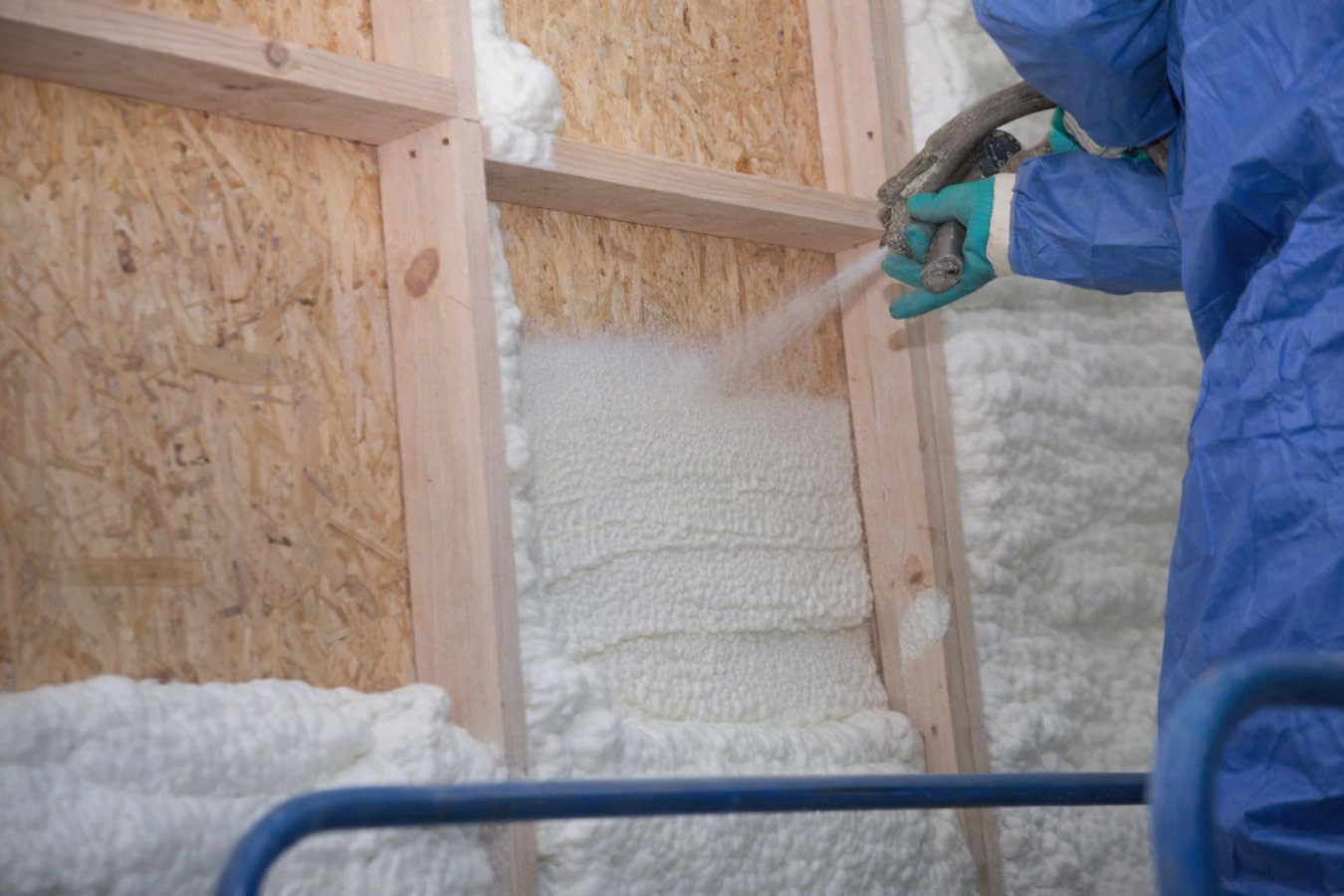
We retrofit insulation into existing Tallahassee homes across every area of the building envelope. In the attic, a crew feeds blown-in material through a hose mounted to a truck-mounted blower and distributes it evenly across the attic floor to the correct depth. For homes where attic insulation alone is not enough, we also address wall cavities using dense-pack blown-in methods that fill each cavity completely through small access holes.
Before adding any new material, we seal air leaks around pipes, fixtures, recessed lights, and framing. This step is critical. Insulation slows heat transfer through solid surfaces, but air sealing stops conditioned air from bypassing insulation through gaps entirely. For homes with crawl space concerns, we pair attic work with home insulation services that address the full envelope. We also offer commercial insulation for building owners in the Tallahassee area.
Every retrofit project starts with a free in-home assessment. We measure existing insulation depth, look for moisture or pest issues, and give you a written quote that spells out exactly what work will be done and what it costs before anything is scheduled.
Best for homes with insufficient attic depth. Brings insulation up to recommended R-value levels in a single visit.
Best for existing homes with empty or under-filled wall cavities. No drywall removal required.
Best for older homes where gaps and leaks are allowing conditioned air to bypass insulation entirely.
Best for homeowners who want a complete picture of where the home is losing energy before committing to a scope.
Unlike most of Florida, Tallahassee sits in a mixed-humid climate zone that includes real winters alongside the long, intense summers. Your insulation has to work in both directions: keeping summer heat out from April through October and holding warmth in when cold fronts push temperatures into the 20s and 30s in January. Contractors who only work in South Florida sometimes underestimate how much winter performance matters here, which is one reason it pays to work with a contractor who knows this specific market.
Tallahassee averages around 56 inches of rain per year and carries high relative humidity for most of the year. Moisture management is not optional in this climate. If insulation is added without first checking for existing moisture problems or verifying attic ventilation, it can trap dampness and lead to mold or wood rot. Homeowners in Tallahassee and surrounding communities like Thomasville, GA and Valdosta, GA share similar climate challenges, and a qualified local contractor accounts for moisture at every stage of the job.
Federal tax credits are currently available for insulation upgrades in existing homes, and the City of Tallahassee Utilities has offered rebate programs for energy efficiency improvements. The payback period on a well-executed retrofit insulation job in Tallahassee is often shorter than homeowners expect, because the cooling season runs nearly half the year and every degree of reduced heat gain translates directly to lower bills. The ENERGY STAR federal tax credit program is worth checking before you schedule your project.
We ask about your home's age, any insulation work done previously, and what is prompting your call. You hear back within one business day. No pressure, no sales pitch at this stage.
We come to the home, go into the attic, measure existing insulation depth, check for air leaks around fixtures and pipes, and look for moisture or pest issues. This visit typically takes 30 to 60 minutes and there is no cost.
You receive a written quote that details what work will be done, what materials will be used, and the total cost. We note whether a permit is required and who handles pulling it. There are no surprises on installation day.
The crew arrives, seals air leaks first, then installs the insulation to the specified depth. For most Tallahassee homes, attic work takes two to four hours. We walk you through what was done before leaving and show you the finished result.
No obligation, no pressure. We assess your attic and walls in person and give you a written quote before any work begins.
(850) 518-3745Every retrofit insulation project is completed by an experienced local crew. Permit documentation is handled for you when the project requires it.
We schedule free in-home assessments before quoting any retrofit project. Retrofit work cannot be priced accurately without seeing the attic, walls, and crawl space in person. We reply to all inquiries within one business day.
We work specifically in the Tallahassee metro and surrounding region. We know the mixed-humid climate zone, the housing stock, and the permit requirements for Leon County and the City of Tallahassee Growth Management Department.
We seal air leaks around pipes, fixtures, and framing before adding insulation. Skipping this step is the most common reason retrofit jobs underperform. We treat it as a required part of the work, not an upsell.
Retrofit insulation done right requires both the correct materials and a contractor who treats air sealing as a mandatory part of the job. We have worked in Tallahassee since 2022 and built our process around this specific climate. Every project is documented, every quote is written, and every attic is assessed in person before any work is scheduled.
Retrofit-style insulation upgrades for commercial buildings in Tallahassee that reduce cooling costs and meet Florida energy code requirements.
Learn moreWhole-home insulation assessments and installation covering every area of your Tallahassee home in a single coordinated project.
Learn moreSummer is coming - get your attic assessed and insulated before the heat season drives your AC bills back up. Call or submit your details and we will reply within one business day.