
Loading
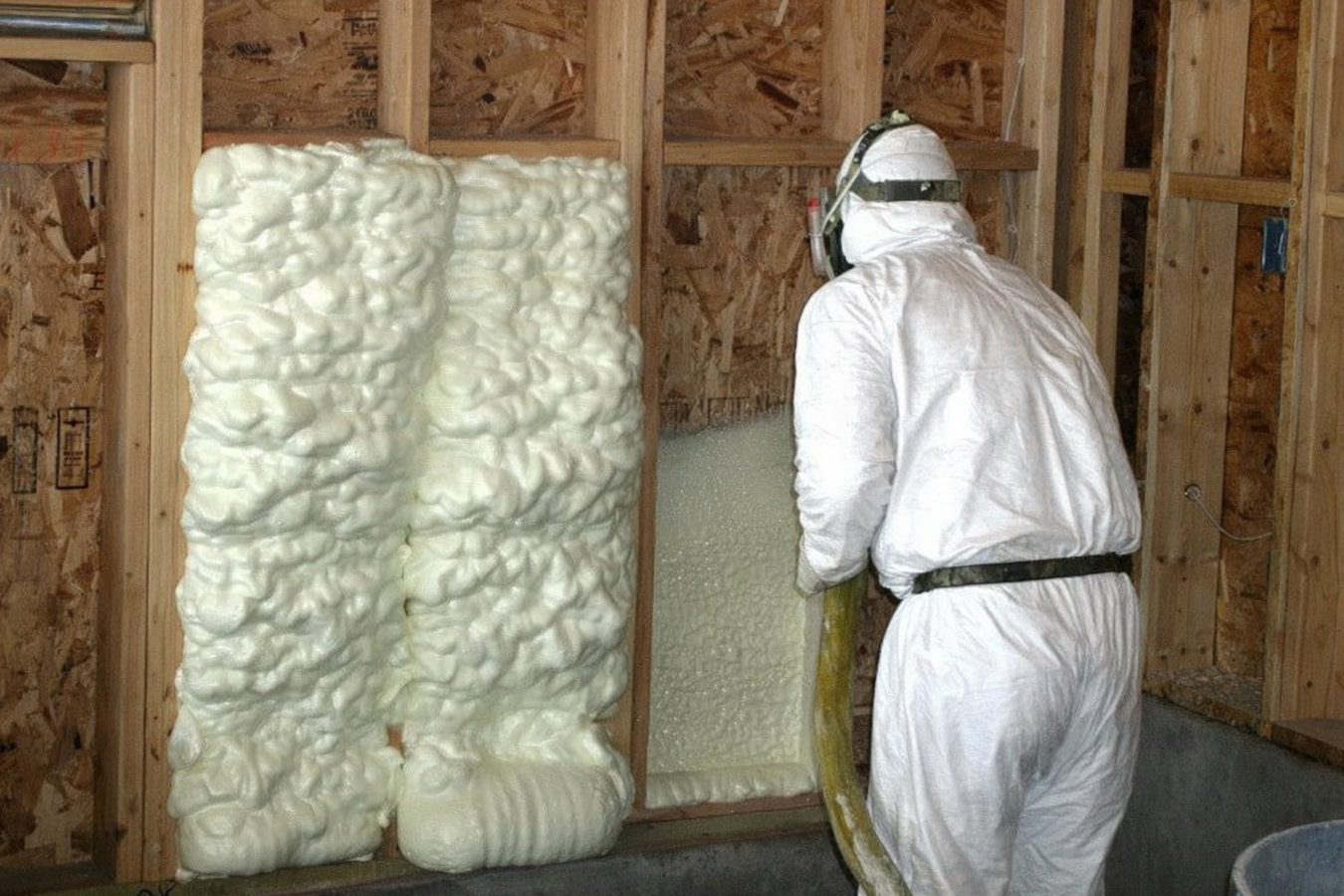
Tallahassee summers are relentless. Open-cell foam seals every air leak while it insulates, so your AC finally keeps up without running all day.
Open-cell foam insulation in Tallahassee expands to fill every gap and crack the moment it is sprayed, sealing air leaks and insulating in a single step - most residential attic jobs finish in one day. It is particularly well matched to Tallahassee homes because the cooling season here runs nearly eight months, and humid outdoor air sneaking through small gaps is one of the main reasons air conditioners struggle to keep up. Many homeowners pairing this with attic air sealing find the combination eliminates the comfort problems that adding insulation alone never fully solved.
Open-cell foam is softer and less dense than closed-cell foam, which makes it the more affordable choice for attics and interior walls in conditioned spaces. It expands roughly 100 times its original volume, which means crews can cover complex framing and irregular shapes without leaving thin spots that fiberglass batts routinely miss. Homes in Tallahassee neighborhoods like Betton Hills, Midtown, and the older subdivisions near FSU and FAMU have benefited from this material precisely because their attics were built in an era when air-sealing simply was not part of the job.
If you are comparing open-cell foam to other spray foam products, the guidance in our spray foam insulation page covers the full family of products and helps you understand which option fits your specific space.
If your cooling costs climb sharply from May through September and your AC seems to run almost constantly, that is often a sign that conditioned air is escaping through gaps in the attic or walls. Tallahassee's heat and humidity put enormous pressure on under-insulated homes, and the AC simply cannot keep up when the thermal envelope has holes in it. A properly sealed home should hold its temperature much more steadily, even on the hottest days.
If the second floor or rooms directly under the roofline feel noticeably warmer than the rest of the house, heat is likely radiating down from an attic that is not properly insulated. This is common in Tallahassee homes built before 1990, where the original insulation has settled or thinned over the years. It is not a thermostat problem; it is a heat-transfer problem that insulation can address.
If you have looked in your attic and seen flat, compressed pink or yellow batts between the joists, or gaps where no insulation exists at all, your home is losing energy every day. Fiberglass batts lose their effectiveness as they age and compress, and they do nothing to stop air movement through the gaps around them. Open-cell foam applied in place of old batts creates a sealed barrier that fiberglass cannot match.
If your home feels heavy or humid indoors even with the air conditioning running, humid outside air is infiltrating through attic gaps or wall penetrations. You might notice condensation forming on cold surfaces or windows. That is a sign the building envelope has breaches that insulation and air-sealing can close, and in Tallahassee's climate the problem compounds through the summer months.
We install open-cell foam in attics, interior walls, and rim joist areas throughout Tallahassee and the surrounding region. For most homes, the attic is the priority: applying foam to the underside of the roof deck creates a fully conditioned attic assembly that keeps ductwork in the same temperature zone as the living space. This approach is especially effective when paired with attic air sealing, because the two steps together address both heat transfer and uncontrolled air movement.
For homeowners who are also concerned about moisture in below-grade areas or exterior exposures, we discuss whether spray foam insulation using a denser, closed-cell product is the better fit for those specific locations. Open-cell and closed-cell foam are often used in the same home, with the right product matched to each application. If old insulation is present, we assess its condition during the site visit and remove it if it would undermine the performance of the new material.
We also work with homeowners who want to address every layer of the building envelope. After the attic is sealed, the next step is often the walls, and we cover that through our wall insulation service for both new and existing construction.
Best for homes where ductwork is in the attic and you want the entire attic space brought inside the conditioned envelope.
For new construction or open-wall renovations where foam can be sprayed before drywall goes up for maximum air-sealing.
For homes with exposed rim joists in basements or crawl spaces where open-cell foam fills and seals the framing gap at the foundation line.
Tallahassee sits in what the U.S. Department of Energy classifies as a hot-humid climate zone, and the city averages over 65 inches of rain per year with more than 60 thunderstorm days. That combination of heat, rain, and humidity means outdoor air is relentlessly trying to push through every small opening in your home's envelope. Standard fiberglass batts slow heat transfer but do nothing to stop that airflow. Open-cell foam handles both simultaneously, which is why it performs so much better here than in drier climates where air infiltration is a smaller share of the total energy loss.
A significant share of Tallahassee's housing stock was built between the 1950s and 1980s, when insulation standards were a fraction of what current Florida building code requires. Many of those homes, in neighborhoods from Frenchtown to Killearn Estates, have attics with original insulation that has been compressing and degrading for decades. The Spray Polyurethane Foam Alliance provides training and quality standards for installers nationwide, and we follow those guidelines on every job. Beyond Tallahassee, we serve homeowners in Thomasville, GA, Gainesville, FL, and Panama City, FL with the same climate challenges and the same approach.
Tallahassee operates its own municipal electric utility, which has periodically offered rebate programs for energy-efficiency improvements including insulation. Before finalizing your project, it is worth checking with the City of Tallahassee Utilities to see whether any current programs apply to your upgrade. A local contractor familiar with the Tallahassee market will generally know which incentive programs are active.
We respond within 1 business day. We will ask a few basic questions about your home and what problem you are trying to solve, so we arrive prepared. There is no pressure and no obligation.
We walk through your attic or the target space, check what is there now, note any moisture or ventilation issues, and answer your questions. You get a written estimate before anything is scheduled.
Before the crew arrives, clear the attic access area and move anything stored in the attic you do not want covered. Plan to be out of the home with your pets for at least two to four hours after the foam is sprayed.
Most residential jobs finish in a single day. The crew masks off fixtures and equipment, applies the foam in passes, and trims any excess. Before leaving, they walk you through the finished work so you can see exactly what was done.
Free estimate, written quote, no obligation. We respond within 1 business day.
(850) 518-3745You get a written scope before we start and a walkthrough of the finished job when we leave. Our work is documented at every step, so you have a record to check against, not just our own word for it.
We have been working on homes throughout Tallahassee and the surrounding area since 2022. That local track record means we know the housing stock, the climate, and the specific conditions that affect how insulation performs here.
You receive a written quote that covers exactly what will be done and what it will cost before our crew shows up. There are no verbal-only agreements and no surprises on the final bill. If the scope changes, we tell you before we proceed.
Before we leave, we walk you through the completed work so you can see the coverage yourself. The Spray Polyurethane Foam Alliance sets quality standards for this trade, and we follow them on every job so you do not have to take our word for it.
Every job we do in Tallahassee is work we stand behind with a written estimate and a walkthrough at the end. We know homeowners here have real choices, and we earn the call by being straightforward about what the job involves and what it will cost.
Pair open-cell foam with targeted attic air sealing to close every gap before insulation goes in.
Learn moreCompare open-cell foam against the full spray foam family, including closed-cell options for moisture-prone areas.
Learn moreTallahassee's cooling season starts early and runs long. The sooner your attic is sealed, the sooner you start seeing it on your electric bill.