
Loading
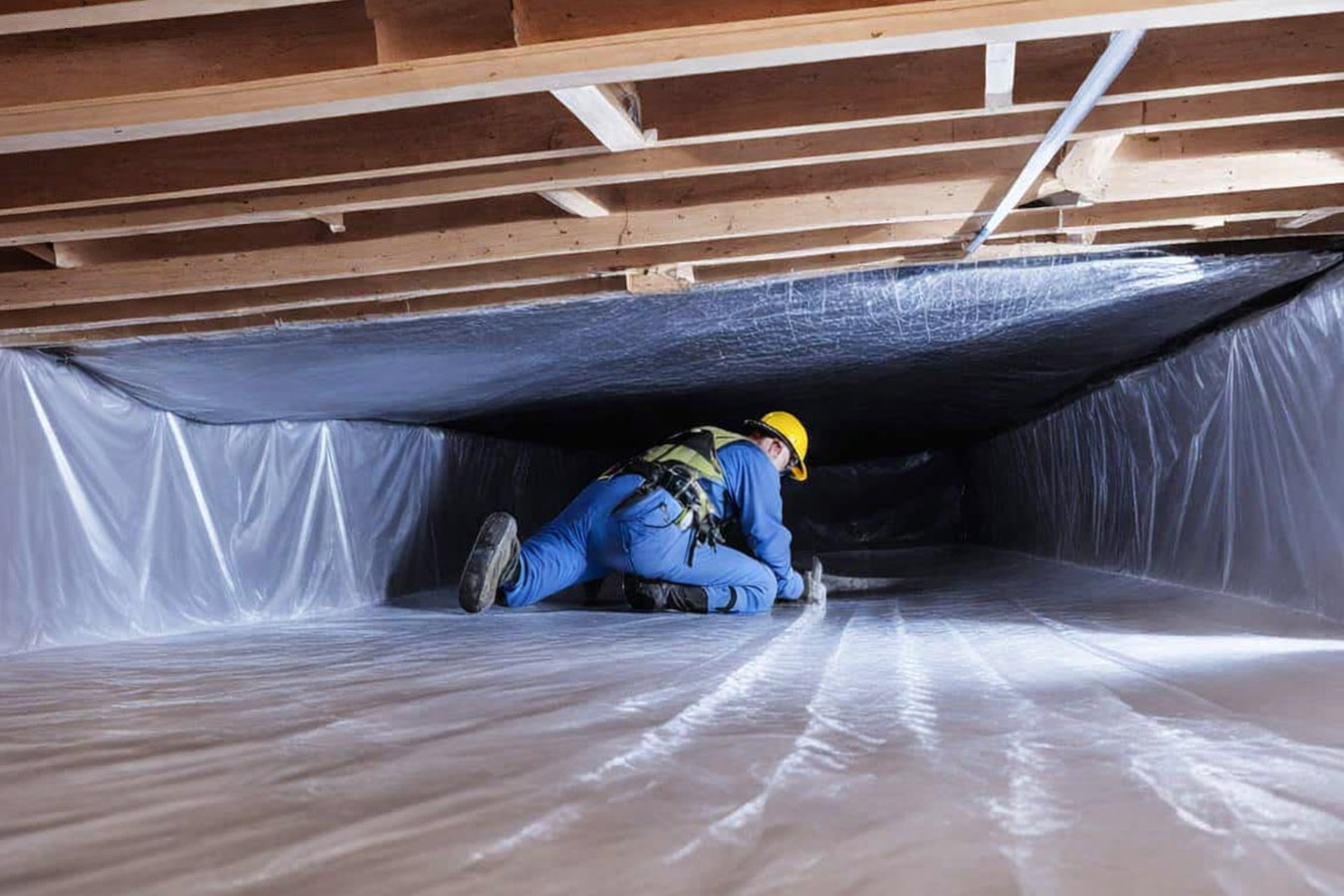
Tallahassee's humidity and clay soil create year-round moisture pressure under your home. A properly installed vapor barrier - with sealed seams and wall coverage - stops that moisture before it reaches your floors, framing, and air quality.
Vapor barrier installation in Tallahassee lays heavy-duty plastic sheeting across the crawl space floor and up the foundation walls, blocking ground moisture from rising into your home's structure - most single-family jobs are completed in one to two days, and the barrier is effective immediately after installation.
Tallahassee's combination of high rainfall, humid subtropical climate, and clay-heavy soil means the ground under most homes stays wet for an extended period after every significant storm. Without a sealed barrier, that moisture travels upward into floor joists, subfloor, and the air of your living space, where it feeds mold, weakens wood, and makes your home harder and more expensive to cool. The U.S. Department of Energy identifies sealed crawl spaces as significantly more effective than vented ones in humid climates like Tallahassee's, because the outdoor air flowing through traditional vents is often wetter than the crawl space itself.
Vapor barrier installation and a targeted ground-cover barrier are related options with different scopes. A basic barrier seals the floor. Full installation adds wall coverage and can include vent sealing and dehumidification. If your home needs only a sealed floor, our crawl space vapor barrier service addresses that in one focused visit.
A persistent earthy or musty smell, especially noticeable when you first walk into the house after it has been closed up, is one of the clearest signs that moisture is rising from the crawl space. In Tallahassee, this smell often gets worse during the summer rainy season when the ground stays saturated for days. If the odor fades when the AC runs but returns when it is off, ground moisture is almost certainly the cause.
When moisture from the crawl space soaks into the wood subfloor, the wood begins to swell and weaken over time. You may notice a slight bounce or give when walking across certain spots, or gaps opening between floorboards. This is especially common in Tallahassee homes built before 1980, where the original crawl space had no moisture protection at all.
If a plumber, pest control technician, or inspector has ever looked into your crawl space and noticed dark spots, fuzzy growth, or staining on wooden beams, moisture has been sitting there long enough to feed mold. Tallahassee's warm temperatures and high humidity create near-perfect conditions for mold to grow quickly once moisture is established in the space.
A damp crawl space makes your home harder to cool. Moisture in the air under your floors forces your air conditioning system to work harder to maintain a comfortable temperature. If your electric bills have been climbing without obvious cause, a moisture problem below the floor could be contributing - especially during Tallahassee's long, humid summers when your system runs almost constantly.
We install vapor barriers ranging from a sealed ground-cover installation to full crawl space encapsulation with wall coverage, vent sealing, and dehumidifier integration. Every installation uses heavier-gauge sheeting matched to Tallahassee's climate - not the thin material that degrades in a warm, humid environment. Seams are overlapped by at least a foot and fully taped, and edges are run up the foundation walls and secured so no soil is ever exposed.
For homeowners who want the most complete moisture solution, we offer full crawl space encapsulation that includes sealing the foundation vents and adding a dehumidifier where needed. Homeowners whose crawl spaces also lack insulation can pair this work with our retrofit insulation service to address both moisture and thermal performance in one visit. Projects that need only a sealed ground surface can be handled through our targeted crawl space vapor barrier service.
Every project starts with a free in-person crawl space assessment. We document what we find, walk you through the options, and give you a written estimate before you commit to anything.
Best for homeowners who need the soil sealed and seams secured, without full wall encapsulation.
Best for homes with higher moisture pressure, including wall coverage, vent sealing, and optional dehumidifier installation.
Best for crawl spaces that also receive humid outdoor air through vents and need active moisture management year-round.
Best for homeowners who want to address both ground moisture and inadequate thermal performance in the crawl space in a single project.
Tallahassee sits in one of the rainiest parts of the continental United States, averaging around 65 inches of rainfall per year - most of it concentrated in a summer rainy season that runs from June through September. After those storms, Leon County's red clay soil holds water near the surface for days. The ground under your crawl space stays wet long after the surface looks dry, and that sustained moisture creates upward pressure into any unprotected space above it.
A large share of Tallahassee's homes were built between the 1940s and 1970s in neighborhoods like Betton Hills, Levy Park, and the Frenchtown corridor - well before current moisture management standards were established. Many of these homes were constructed with open, unlined crawl spaces that have been absorbing ground moisture for decades. The Building Science Corporation recommends that crawl spaces in humid climates be treated as conditioned or semi-conditioned spaces, not ventilated ones - because venting brings in more moisture than it removes when outdoor humidity is high.
We serve homeowners throughout the Tallahassee area, including Tallahassee, Panama City, and Gainesville. We know the housing ages, soil conditions, and climate patterns that shape what each crawl space actually needs.
We ask a few basic questions about your home and crawl space access, then schedule a free in-person assessment. You will hear back from us within one business day. There is no obligation on the first visit.
A technician enters your crawl space and documents its current condition - size, existing moisture protection, soil conditions, and any signs of mold, standing water, or damaged wood. This visit typically takes 30 to 60 minutes, and we walk you through what we found before leaving.
You receive a written estimate that details square footage covered, material type and thickness, what prep work is included, and whether a permit is required. We explain your options in plain terms and do not pressure you toward the most expensive scope.
The crew clears the space, installs the barrier with fully overlapped, taped seams and secured edges, and does a final check before leaving. You receive photos of the completed work. Within a few weeks, most homeowners notice a clear reduction in musty odors.
We come out, assess your crawl space, and give you a written quote with no pressure and no obligation. Most homeowners find the work is more straightforward and affordable than they expected.
(850) 518-3745All vapor barrier work is performed by an experienced local crew. We handle any required permits through the City of Tallahassee's Growth Management Department on your behalf, so the work stays documented and can be inspected.
We install heavier-gauge barrier material specifically suited to Leon County's clay soil and sustained humidity. We tell you exactly what is being installed before work starts - thickness, manufacturer, and warranty coverage included.
We work throughout the Tallahassee metro and surrounding region. We understand how older Tallahassee homes were built, what Betton Hills and Levy Park crawl spaces typically look like, and what Tallahassee's rainy season actually does to an unprotected crawl space.
We reply to all inquiries within one business day and schedule a free in-person crawl space assessment before providing any price. You receive a written quote that details square footage, material, prep work, and any permit requirements before you decide anything.
Vapor barrier installation is one of the most impactful things a Tallahassee homeowner can do for long-term moisture control, and the difference between a job that holds up for 20 years and one that starts failing in three comes down to material thickness, sealed seams, and a contractor who does not cut corners on coverage. We have been working on Tallahassee homes since 2022 and we back every project with a written scope and material warranty before any work begins.
After vapor barrier installation seals ground moisture, adding insulation to existing walls and attic spaces is the next step toward a fully weatherized home.
Learn moreA targeted crawl space ground-cover barrier for homeowners who need moisture control at the floor level without full wall encapsulation.
Learn moreCall now or submit your information and we will be in touch within one business day. Getting ahead of the summer rainy season means your crawl space is protected before the months when ground moisture is at its worst.