
Loading
Every gap in your attic floor sends cooled air straight into the heat above. We find every one and seal it, so your AC works for your home, not against it.
Attic air sealing in Tallahassee closes the gaps, cracks, and penetrations in your attic floor that let cooled air escape into attic heat and humid outside air push back down into your living space. Most homes take two to six hours. Insulation slows heat transfer, but it cannot stop air from moving through gaps, and moving air carries far more heat than still air. Sealing first, then insulating, is the order that actually works, and many homes here benefit from combining both in a single visit alongside whole-home air sealing services.
Tallahassee homes built before the mid-1990s were almost never air sealed during construction. That means homes in neighborhoods from Myers Park to the Southwood suburbs have been losing conditioned air through the same gaps for decades. The gaps themselves are mundane: holes around plumbing pipes, wiring runs, recessed light fixtures, and the tops of interior walls where framing meets the attic floor. None of them are visible from inside your home, but together they add up to a steady, expensive leak.
If your home has also never had a proper insulation upgrade, we typically recommend addressing both at the same time. Our attic insulation page covers what that combination looks like and what to expect from the process.
If the second floor or rooms near the ceiling feel noticeably warmer than the rest of the house, even with the AC running all day, hot attic air is likely pushing through gaps in your ceiling into your living space. This is one of the most common complaints Tallahassee homeowners describe before getting their attic sealed. Turning the thermostat lower rarely solves it because the problem is physical, not mechanical.
If your summer bills have crept up significantly over the past few years without an obvious reason, air leakage is a likely culprit. Your air conditioner is working harder to replace the cooled air escaping through your attic floor. A quick check: compare your bills from the same month over the past three years. A steady upward trend without a change in usage is a signal worth investigating.
Stand under a recessed light fixture on a warm day and hold your hand near the edge. If you feel warm air coming down, that is attic air finding its way in through the gap around the fixture. This is one of the most common and easily overlooked leak points in homes built before the mid-2000s, and it is a problem that sealing can fix in a single visit.
Tallahassee's humidity means that warm, moist air moving through attic gaps can condense on cooler surfaces inside your home. If you have noticed a faint musty smell in an upstairs room or small staining near ceiling fixtures, moisture from the attic may be the source. This is worth addressing quickly because moisture problems that start small tend to grow through the summer months.
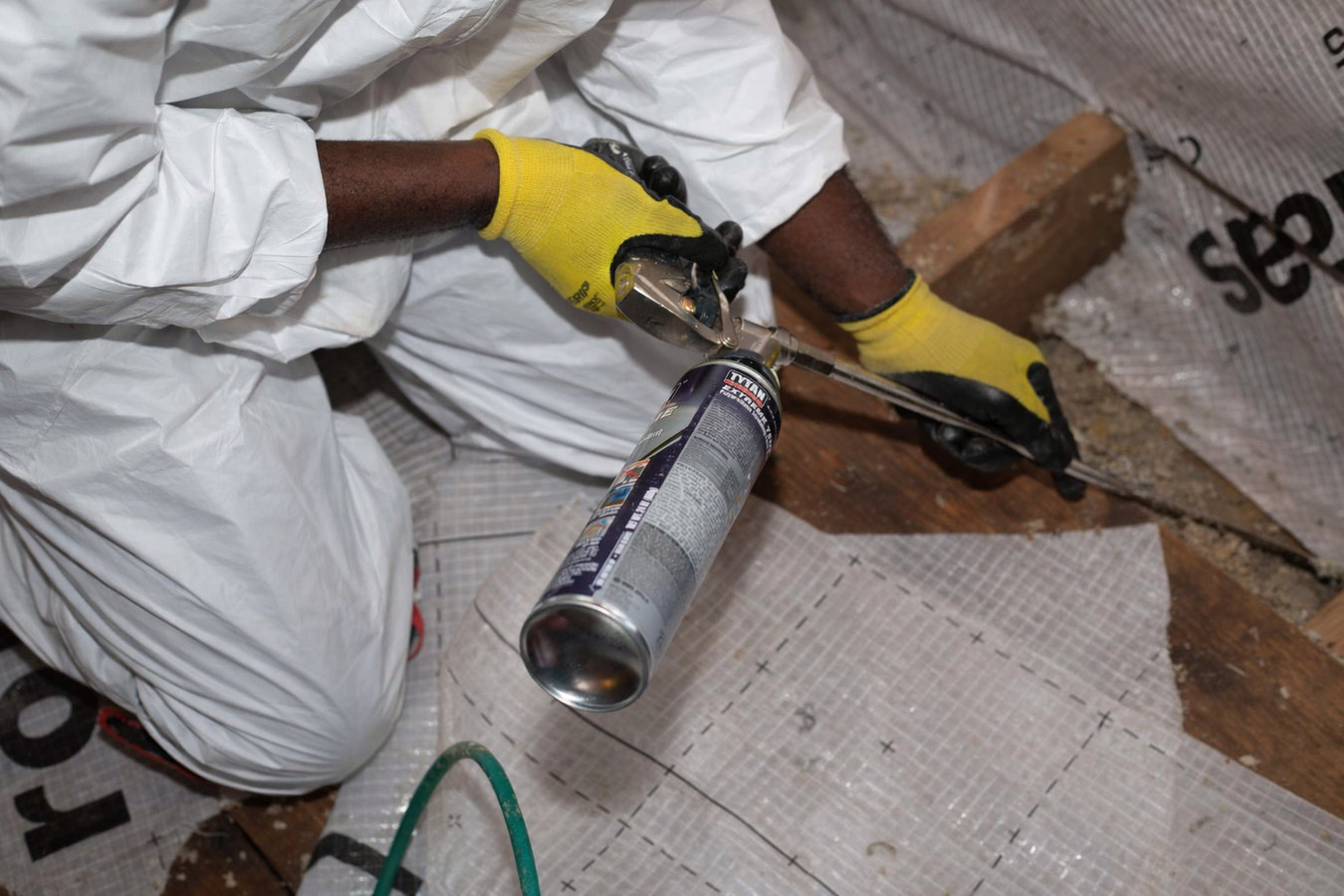
Our attic air sealing work starts with a thorough inspection of the attic floor. We move or lift existing insulation to access the deck, then systematically locate and seal every gap we find using foam, caulk, or rigid materials depending on the size and type of opening. Gaps around plumbing and wiring get foam. Larger openings, like dropped soffits over kitchen cabinets or air handler platforms, get rigid blocking sealed in place. The goal is a continuous air barrier across the entire attic floor, not spot treatment of a few visible holes.
We pair attic air sealing with attic insulation on most jobs because the two steps together address both problems at once. Sealing without insulating leaves the thermal resistance problem unsolved. Insulating without sealing leaves the air movement problem unsolved. When both are done in the same visit, you get the full benefit and avoid paying for a second mobilization. For whole-home energy performance, we also address gaps through our air sealing services that cover penetrations throughout the building envelope, not just the attic floor.
If you are also dealing with moisture in a below-grade space, the same principles apply, and we address that through our crawl space vapor barrier service. The two services together address both the top and bottom of your home's thermal envelope.
For existing homes where the attic floor is the primary air boundary and sealing the penetrations there solves the comfort and efficiency problem.
For homes that need both steps done at once, combining air sealing and blown-in or foam insulation in a single visit.
For homeowners who want a before-and-after measurement confirming the sealing work actually reduced leakage.
Tallahassee experiences some of the highest annual thunderstorm frequency in the country, with average annual humidity consistently above 70 percent and a cooling season that runs from late April through October. The ENERGY STAR Seal and Insulate program estimates that sealing and insulating the attic can cut heating and cooling costs by up to 20 percent. In a climate like Tallahassee's, where air conditioning runs for the better part of eight months, that percentage translates into a meaningful dollar amount on every monthly bill.
A large share of Tallahassee's housing stock was built between the 1950s and 1980s, during a period when attic air sealing was rarely part of residential construction. Homes in areas like Levy Park, Betton Hills, and the older subdivisions near FSU and FAMU have typically never been sealed, which means every year of summer heat is passing that same conditioned air loss through the same untouched gaps. We regularly work on homes in these neighborhoods and in nearby areas including Thomasville, GA, Valdosta, GA, and Gainesville, FL, all of which share the same hot-humid climate conditions.
The Building Performance Institute certifies contractors in building science and energy efficiency, including the proper techniques for attic air sealing in humid climates. Following those standards matters here more than in drier parts of the country because improper ventilation in a sealed attic can trap moisture that leads to mold and structural damage over time.
We respond within 1 business day. We will ask about your home's age and the comfort problems you have noticed, so we come prepared. No pressure, no obligation.
We inspect your attic floor, check existing insulation, identify visible gaps, and review the ventilation setup. Some jobs include a blower door test at this stage for a clear baseline. You receive a written quote before any work is scheduled.
The technician moves or lifts existing insulation to access the attic floor and systematically seals every gap with foam or caulk. The work happens almost entirely in the attic. You can remain in your home throughout.
Before leaving, we walk you through what was found and sealed. If a blower door test was done before the work, we retest to confirm the reduction. You receive written documentation of the completed work for tax credit or rebate claims.
Free written estimate, no obligation. You can stay in your home during the work.
(850) 518-3745You get a written scope before work starts and photos of the finished job when we leave. Our work is verifiable at every step, not just something you take on our word.
We have been working on homes throughout Tallahassee and Leon County since 2022. That gives us direct familiarity with the local housing stock, the specific attic layouts common to each era of construction, and the conditions that affect how sealing performs here.
Every job starts with a written quote that covers exactly what will be done and what it will cost. There are no surprises on the final bill, and if we find something unexpected once we are in the attic, we tell you before we continue.
We can perform a blower door test before and after the sealing work so you have a measured result, not just a feeling. That documentation is also what you need to file for federal tax credits and local utility rebates that can offset a meaningful portion of the job cost.
We work on attics throughout Tallahassee and the surrounding region, and we treat every job the same way: a clear assessment, a written price, and a walkthrough when we are done. That straightforward approach is what keeps Tallahassee homeowners calling us back when the next job comes up.
Complete your moisture control plan by pairing attic air sealing with a crawl space vapor barrier below.
Learn moreAir sealing beyond the attic: we address gaps throughout the entire building envelope for whole-home performance.
Learn moreTallahassee's cooling season is long and expensive. Sealing your attic now means lower bills from the first hot month forward.