
Loading
Tallahassee summers punish under-insulated homes. Closed-cell spray foam delivers the highest R-value per inch of any available insulation, seals air leaks and moisture in a single pass, and holds up in Florida's demanding climate for the life of your home.
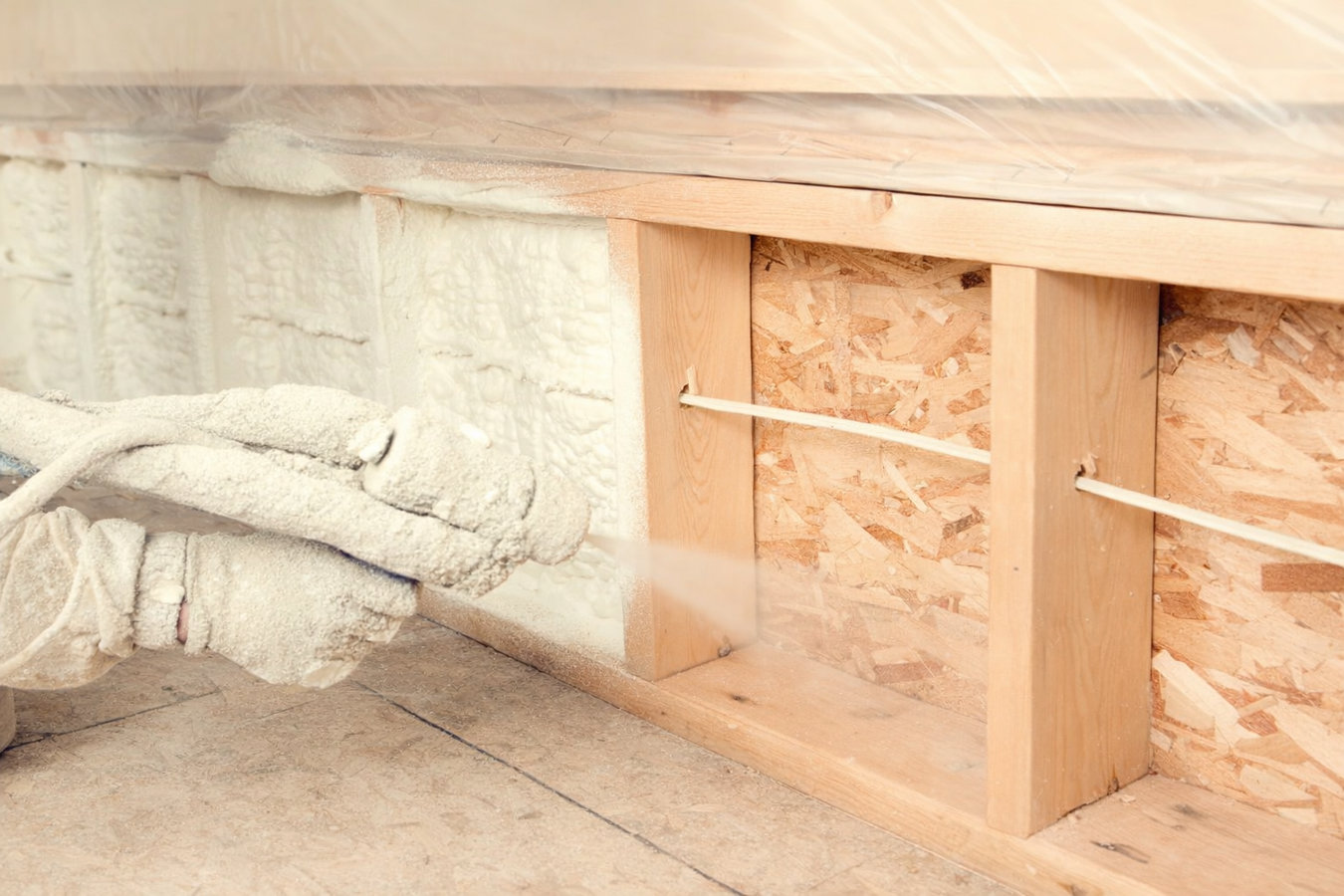
Closed-cell foam insulation in Tallahassee is applied as a two-part liquid that expands, hardens into a dense rigid layer, and seals gaps while slowing heat transfer at the same time - most residential attic or crawl space jobs are completed in one to two days, with a ventilation period of a few hours before re-entry.
No other residential insulation material delivers as much thermal resistance in as little thickness. In Tallahassee's climate, where attic temperatures can exceed 140 degrees in July and the air stays humid well into October, that density matters. Closed-cell foam applied to the underside of your roof deck or crawl space walls does not shift, settle, or absorb moisture the way fiberglass batts do.
For homes where moisture control is as much a concern as heat, closed-cell foam pairs naturally with spray foam insulation assessments that look at the whole home. Knowing where you have the most air and moisture intrusion before you choose a product is the step most homeowners skip.
If your electric bill has been creeping up year after year and your air conditioner seems to run almost constantly through Tallahassee's long summers, poor insulation is one of the most common culprits. When conditioned air escapes through gaps in your attic or walls, your system works harder to maintain the temperature you set. This is especially common in Tallahassee homes built before 1990, where insulation was minimal to begin with.
If you have a room under the roofline or at the end of a hallway that never quite cools down no matter how long the AC runs, heat is getting in through an under-insulated ceiling or wall. In Tallahassee's summer heat, attic temperatures can reach extreme levels, and that heat radiates down into rooms below if there is nothing substantial blocking it.
Spend a few minutes in your attic on a sunny day. If you can see pinpoints of light coming through the roof deck or around penetrations where pipes and wires pass through, those are air leaks. In Tallahassee's climate, every gap that lets in hot, humid air is also a pathway for moisture - and moisture in an attic is how mold and rot get started.
A musty smell that does not go away, especially in lower-level rooms, closets, or near exterior walls, often signals that moisture is getting in somewhere it should not be. Tallahassee's heavy rainfall and shaded lots mean that crawl spaces and wall cavities can stay damp for extended periods. Closed-cell foam can seal those entry points, but any existing moisture damage needs to be addressed before anything is applied.
We install closed-cell spray foam in attics, crawl spaces, and wall cavities throughout the Tallahassee metro. The most common application here is under the roof deck, where the foam is sprayed directly onto the structural framing to create an airtight, moisture-resistant layer that keeps attic temperatures from radiating down into your living space. For homes with ductwork running through the attic, this approach brings that space inside the conditioned envelope and eliminates a major source of cooling loss.
In crawl spaces, we apply closed-cell foam to the perimeter walls and rim joists, where air and moisture entry is most concentrated. When combined with open-cell foam insulation in interior wall cavities where moisture resistance is less critical, you get a complete thermal and air barrier across the full building envelope.
Before any foam is applied, we inspect the area for existing moisture damage. Applying foam over a wet surface or compromised wood seals the problem in, guarantees early failure, and creates conditions for rot. Every job starts with a thorough look at what is already there.
Best for homes with ductwork in the attic or where maximum thermal performance is needed by treating the entire roof assembly.
Best for homes with moisture intrusion, failed fiberglass batts, or crawl spaces that have historically been damp.
Best for exterior walls in older Tallahassee homes where no insulation was originally installed and access allows injection or open application.
Best for homeowners who want to understand where their biggest heat and moisture entry points are before committing to a specific scope.
Tallahassee sits in one of the most demanding climate zones for residential insulation in the country. Average July highs push into the low 90s, the air stays humid through October, and the city's famous tree canopy keeps north-facing walls and crawl spaces damp long after summer storms pass through. Fiberglass batts absorb moisture, compress over time, and eventually sag away from the framing they were meant to insulate. Closed-cell foam does none of those things.
Tallahassee is also close enough to the Gulf Coast that tropical storms and hurricanes are a real possibility, not a distant one. Hurricane Michael in 2018 caused significant damage to homes and trees across the area even though it made landfall about 100 miles to the southwest. Closed-cell foam applied to the underside of a roof deck bonds the assembly together and adds resistance to the wind forces that cause roofs to fail. The Insurance Institute for Business and Home Safety has published research on how roof deck foam can improve wind resistance, and some insurers recognize the improvement - worth a call to your carrier after the work is done.
We work throughout the full Tallahassee metro, including homeowners in Valdosta, GA, Dothan, AL, and Brunswick, GA, where the same humid conditions demand the same moisture-resistant approach. We handle Leon County permits for every project that requires one.
We ask about your home's age, the area you want insulated, and what problems you have been noticing. We respond within one business day and schedule a free on-site assessment at no charge.
We walk the attic, crawl space, or wall area, check for existing moisture or damage, and measure the space. You get a written quote showing the area to be covered, the foam thickness, and the total cost before any commitment.
You will need to clear the work area and arrange to be away from home on installation day - everyone including pets needs to be out. If a permit is required through Leon County, we handle the application before the crew arrives.
The crew sprays the foam in controlled passes; it expands and hardens within minutes. Before they leave, you have a written re-entry time and a final walkthrough of the completed work with documentation for any tax credit or insurance inquiry.
Free on-site estimate. We inspect the attic or crawl space, explain exactly what we find, and give you a written quote with no obligation.
(850) 518-3745All closed-cell foam work is performed by experienced local crews. You receive documentation before work begins, and we handle any permits through Leon County that the project requires.
You will have a clear, written re-entry window in hand before the crew arrives - not an estimate after the fact. We follow EPA and manufacturer guidelines on ventilation to protect your household.
We focus on the Tallahassee metro and understand the specific demands that North Florida's heat, humidity, and older housing stock place on spray foam installations.
Before we spray anything, we check for existing moisture or damage. Applying foam over a wet surface seals the problem in rather than out, and that is a shortcut we do not take.
Spray foam applied incorrectly performs poorly and can cause moisture problems it was supposed to prevent. We focus on getting the conditions right before the first pass and document every job so you have a record that stands up whether you are claiming a tax credit, talking to your insurer, or preparing to sell your home. The Spray Polyurethane Foam Alliance sets industry standards for installer training and best practices.
Open-cell foam is a cost-effective choice for interior walls and sound dampening where maximum moisture resistance is not the primary concern.
Learn moreAn overview of all spray foam options, including where each type performs best and how to choose the right product for your Tallahassee home.
Learn moreTallahassee's cooling season starts early and runs long. The sooner your home is properly sealed and insulated, the sooner every month's electric bill reflects it.