
Loading
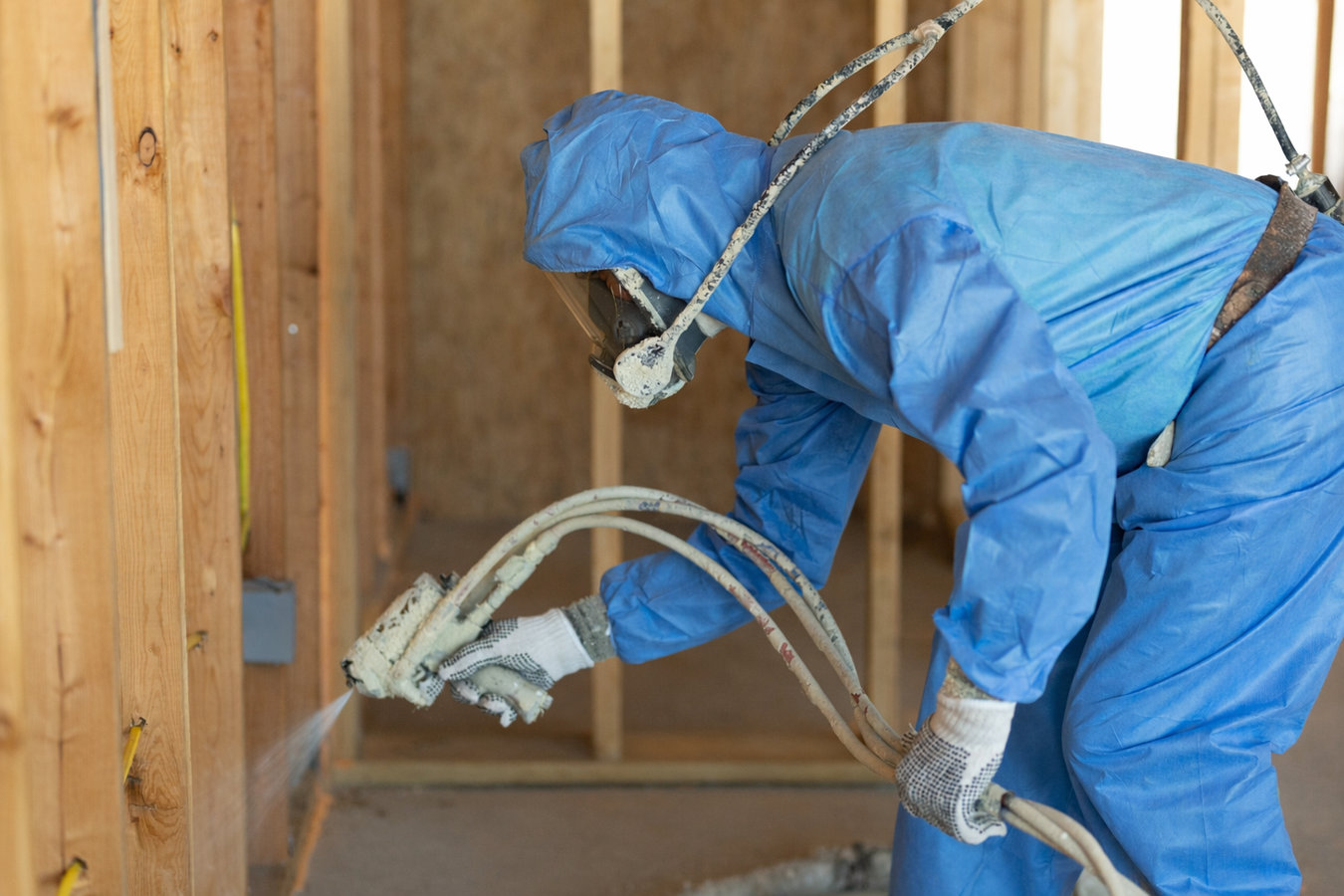
Tallahassee summers punish under-insulated homes. Spray foam seals every gap and crack at the same time it insulates, so your air conditioner stops fighting a losing battle against the heat and humidity outside.
Spray foam insulation in Tallahassee seals air leaks and insulates in one step - most attic, crawl space, or wall jobs are completed in one to two days. It starts as two liquid chemicals that mix at the spray tip and expand into a rigid foam within seconds, filling every gap traditional batts cannot reach.
In this climate, that air-sealing ability matters most. Tallahassee sits in a humid subtropical zone where your air conditioner runs hard from April through October. When hot, humid outdoor air seeps through gaps in your attic floor or crawl space walls, your system can never keep up. The U.S. Department of Energy estimates that air leaks account for 25 to 40 percent of the energy used for heating and cooling in a typical home.
If your home is more than 30 years old, in a neighborhood like Betton Hills, Midtown, or near FSU, there is a good chance the insulation has never been upgraded. Spray foam paired with closed-cell foam insulation in the crawl space is often the right combination for older Tallahassee homes that deal with both heat and moisture.
If your cooling costs climb from May through September and your AC runs almost constantly, poor insulation is often the cause. Tallahassee's long cooling season means an under-insulated home pays that penalty every month for most of the year.
A room with a lot of exterior wall or a ceiling directly below the attic that never quite reaches the set temperature is a classic sign. In older neighborhoods, this is especially common in additions built in the 1970s and 1980s when air sealing was not a priority.
Hold your hand near an exterior wall outlet on a hot afternoon. Warm air coming through means your walls have air leaks that spray foam solves, because it seals and insulates at the same time. The same test works near window frames and where walls meet the floor.
Tallahassee's clay soil and frequent rain make crawl spaces prone to moisture. If you notice musty air inside your home or condensation on pipes under the house, your current vapor barrier is not enough. Closed-cell spray foam on the crawl space walls stops that moisture cycle at the source.
We install spray foam insulation in attics, crawl spaces, exterior walls, and rim joists throughout the Tallahassee metro. The right type depends on where you need it and what problem you are solving. For attic floors and interior walls, open-cell foam handles insulation and sound deadening well. For crawl spaces, exterior walls, and any area with moisture exposure, closed-cell foam is the better choice because it acts as a vapor retarder at the same time.
Many Tallahassee homeowners pair spray foam with attic insulation to address both air sealing and thermal mass in the same project. For those dealing with crawl space moisture, we also offer closed-cell foam insulation applied directly to the crawl space walls and floor.
Every job starts with a free in-home assessment. We look at the current insulation, check for moisture or mold issues, and explain exactly what we recommend and why before you commit to anything.
Best for attic floors, interior walls, and anywhere sound control is a priority alongside insulation.
Best for crawl spaces, exterior walls, and any area with moisture exposure or flood risk.
Applied to the attic floor or roof deck to stop heat from pushing into your living space.
Seals the crawl space walls and floor to block moisture intrusion and improve air quality in the home above.
Tallahassee sits in a humid subtropical climate where attic temperatures can exceed 140 degrees on a summer afternoon. A large share of the city's housing stock was built between the 1960s and 1980s, before Florida adopted its current energy efficiency requirements. Homes in established neighborhoods like Killearn Estates, Midtown, and areas near FSU and FAMU were often built with minimal insulation and no real air barrier at all.
The city's dense tree canopy is beautiful but means many homes sit in shade that holds moisture on roofs, siding, and in crawl spaces longer than in sunnier climates. Frequent afternoon thunderstorms add to that moisture load. Closed-cell spray foam is well-suited to these conditions because it resists moisture absorption and does not lose its insulating value when it gets damp, unlike some blown-in products.
We serve homeowners throughout the Tallahassee area, including customers in Thomasville, GA, Valdosta, GA, and Dothan, AL. Florida permit requirements apply to insulation work that affects the building envelope. We handle the permit process for every job that requires one.
We respond within 1 business day and ask a few questions about your home's age, the areas needing insulation, and any comfort or moisture issues you have noticed.
A technician visits your home and walks through the attic, crawl space, or walls. We measure what is there, check for moisture or mold, and explain our recommendation in plain language before you commit.
You receive a written, itemized quote. If the project requires a permit through City of Tallahassee Development Services or Leon County, we handle the application before scheduling installation.
The crew arrives, protects surrounding surfaces, and applies the foam. Most jobs finish in one day. Plan to be away from the home for 24 hours after spraying. We walk you through the completed work before we leave.
We respond within 1 business day. There is no obligation and no pressure. After you submit, someone from our office will call to schedule a free on-site estimate at a time that works for you.
(850) 518-3745Every project comes with a written scope and a walkthrough of the finished work. You have documentation in hand before work begins, not after a problem arises.
We schedule free in-home estimates and respond to all inquiries within one business day. No phone quotes for spray foam - we walk the space first.
We work exclusively in the Tallahassee metro and surrounding region. We know how Leon County's clay soil, canopy shade, and humid summers affect insulation performance.
We walk you through completed work before packing up. If a permit was pulled, the inspection record becomes part of your home's file.
The Spray Polyurethane Foam Alliance sets industry standards for installation quality, product safety, and re-entry times. We follow those standards on every job and can provide documentation of the materials used. That paperwork matters when you sell your home or make an insurance claim.
Attic insulation lowers the heat load pushing into your living space and reduces how hard your AC has to work all summer.
Learn moreClosed-cell foam provides a rigid, moisture-resistant barrier suited for crawl spaces, exterior walls, and flood-prone areas.
Learn moreTallahassee summers are long. The sooner your home is properly sealed, the sooner your cooling bills come down.