Loading
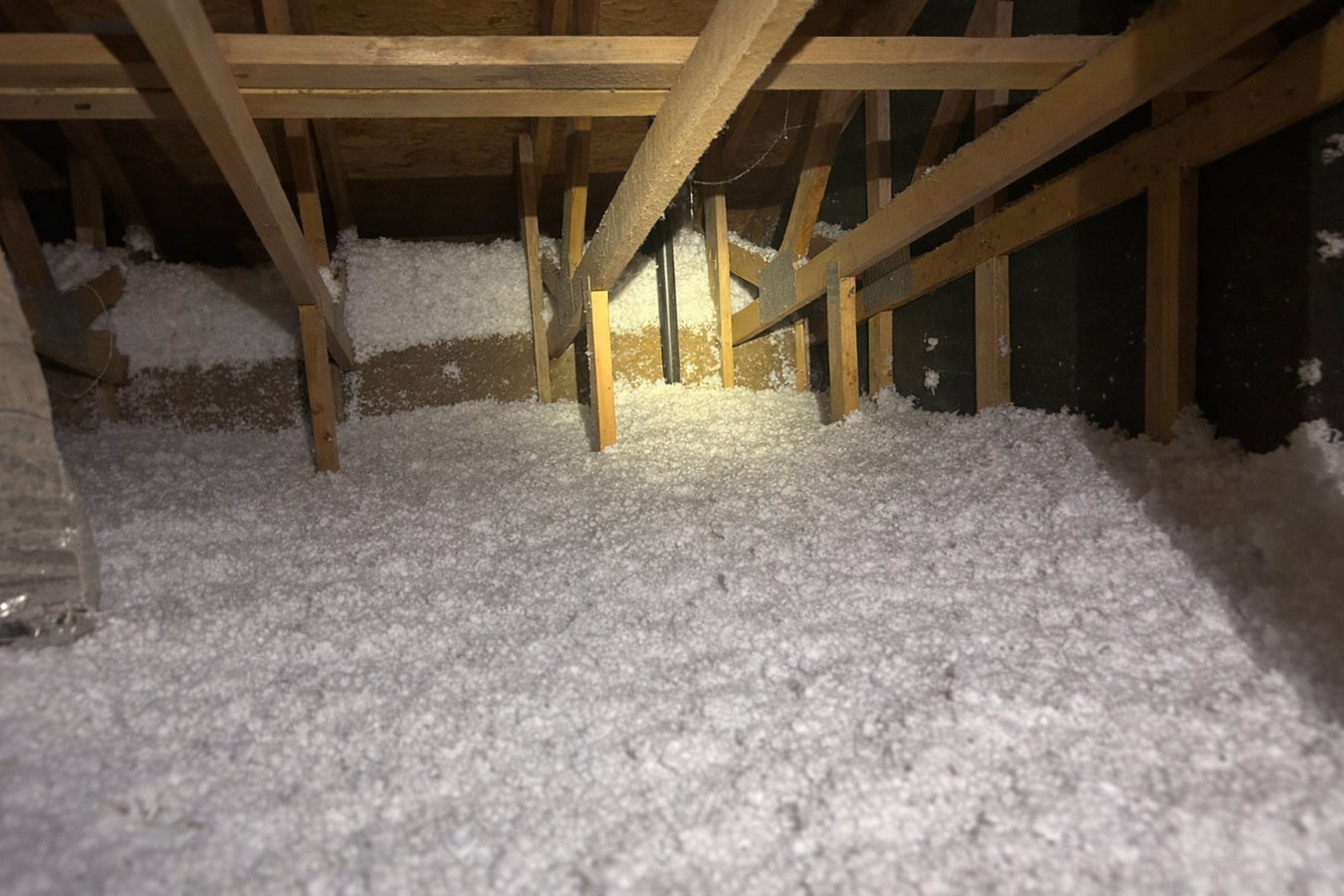
Your attic loses more conditioned air than any other part of your home. Blown-in insulation covers every gap and corner, so your AC runs less and your home stays comfortable through Tallahassee's long, hot summers.
Blown in insulation in Tallahassee fills attic floors with loose fiberglass or cellulose material blown in through a hose - most jobs on a standard home take two to four hours and can be completed while you're home. The result is a complete thermal barrier that rigid batts or boards cannot match in an older attic with years of settled or missing material.
Tallahassee's long cooling season means your attic is working against you for most of the year. Heat builds to well above ambient temperature in an uninsulated or under-insulated attic and pushes down through your ceiling into your living space all afternoon. Many homes in midtown and older neighborhoods were built in the 1950s through 1980s with insulation levels that fall well short of what the climate actually demands today.
If you've already had your attic assessed and are considering your options, our attic insulation page covers the full range of attic solutions in detail.
If rooms directly under the roof feel significantly warmer than the rest of your home even when the AC is running, heat is moving through your ceiling faster than it should. In Tallahassee summers, where outdoor temperatures regularly reach the mid-90s, a thin attic can push ceiling temperatures well above 100 degrees. That heat radiates down and forces your AC to work far harder than necessary.
If your cooling bill has been climbing without a clear reason, your attic insulation is one of the most common culprits. Tallahassee homeowners rely on air conditioning for most of the year, and an under-insulated attic is a direct cause of costs that stay stubbornly high. A quick attic check can tell you whether your current depth is anywhere close to what this climate zone requires.
If you look into your attic and the wooden framing members are visible above the material, you almost certainly do not have enough insulation. Adequate coverage for a Tallahassee home should be deep enough that the framing is completely buried and invisible from above. This is one of the clearest visual signals that your home is losing conditioned air through the ceiling.
Homes built in Tallahassee before the mid-1990s were insulated to standards well below what is recommended today. If you have lived in your home for years and no one has ever inspected the attic, there is a strong chance the insulation has settled, degraded, or was never deep enough. Even looking through the attic hatch gives you a rough sense of whether the material looks thin or patchy.
Blown-in insulation is the most practical option for upgrading an existing attic in an older home. The material, whether cellulose insulation or fiberglass, fills in around framing, ductwork, and wiring without any demolition. We measure what is currently in your attic, calculate the depth needed to reach the recommended level for this climate zone, and install it in a single visit.
For many Tallahassee homeowners, blown-in insulation works best when paired with air sealing. Before adding new material, we check for gaps around light fixtures, plumbing penetrations, and HVAC boots where conditioned air escapes. Sealing those gaps first makes the insulation significantly more effective. If you have more extensive needs, our home insulation service covers whole-home assessments and multi-area upgrades.
Some older Tallahassee homes have degraded or contaminated attic insulation that needs to be removed before new material goes in. If that applies to your home, our attic insulation page explains when removal is the right first step.
Best for homeowners who want a recycled, eco-friendly material that also handles Tallahassee's humidity well.
A long-lasting option resistant to moisture and mold, well-suited to Florida attics with high summer humidity.
For attics that have some existing material but fall short of the recommended depth for this climate zone.
For attics with little or no existing insulation, bringing coverage to the full recommended level in one visit.
Tallahassee sits in a hot, humid climate zone where the cooling season runs roughly eight months a year. The U.S. Department of Energy recommends significantly deeper attic insulation for this zone than most homes built before the 1990s actually contain. A large share of the city's housing stock, particularly in neighborhoods like Betton Hills, Midtown, and the Frenchtown area, was built between the 1950s and 1980s under insulation standards that made sense then but fall well short of what is available today.
Tallahassee's average relative humidity regularly exceeds 70 percent, which creates a moisture management challenge on top of the heat. Wet or damp insulation loses much of its effectiveness and can contribute to mold growth on attic framing. A thorough contractor will check for moisture issues and existing ventilation before adding any new material. Skipping that step is a common shortcut that causes problems down the road.
We serve homeowners throughout the area, including in Gainesville, Thomasville, GA, and Valdosta, GA. If your home is in one of these areas and you suspect your attic insulation is not keeping up with the climate, call us for a free on-site estimate.
We respond within 1 business day. A brief call covers the basics: home size, age, and what is prompting you to call. We never quote a price without seeing the attic first.
A technician visits your home, measures current insulation depth, and inspects for moisture or air leaks. You receive a written estimate that explains exactly what is recommended and why. This visit is free, with no obligation.
If the City of Tallahassee requires a permit for your project scope, we handle the application with the Growth Management Department before work begins. This protects you and ensures the work is done to code.
The crew arrives with a truck-mounted blowing machine, runs a hose into the attic, and builds up coverage across the entire floor. Before leaving, we confirm depth markers are in place and coverage is even throughout the attic.
We respond within 1 business day. There is no obligation, and no pressure to book. After you submit, someone from our office will call to schedule a free on-site attic assessment at a time that works for you.
(850) 518-3745You get a written scope before we start and a walkthrough of the finished attic when we leave. Experienced local crews handle the work, and any permit your project needs gets pulled before anyone steps foot in your attic.
We work across Tallahassee, Leon County, and surrounding areas in three states. Local crews mean shorter scheduling windows and someone who actually knows the housing stock, climate challenges, and permit requirements in your city. No dispatching from out of state.
After every blown-in job, we leave calibrated depth markers standing throughout the attic so you can verify coverage yourself. You should not have to take a contractor's word for it. This is standard practice on every project we complete.
We never give you a number over the phone without seeing your attic first. Every estimate is written, itemized, and explains exactly what material is being used and how much. The U.S. Department of Energy recommends R-38 or higher for attics in North Florida - we will show you exactly how we plan to get there.
A blown-in insulation job is not complicated, but the difference between a thorough job and a rushed one shows up on your energy bills for years. We do the assessment, do the work, and leave behind documentation so you always know exactly what was installed and to what depth. Contact us to schedule a free estimate.
Whole-home insulation assessment and upgrade covering attics, walls, and crawl spaces for complete thermal performance.
Learn moreFull attic insulation services including removal of old degraded material before new coverage is added.
Learn moreCall Tallahassee Insulation today for a free on-site blown-in estimate - schedule now before the summer heat sets in.