
Loading
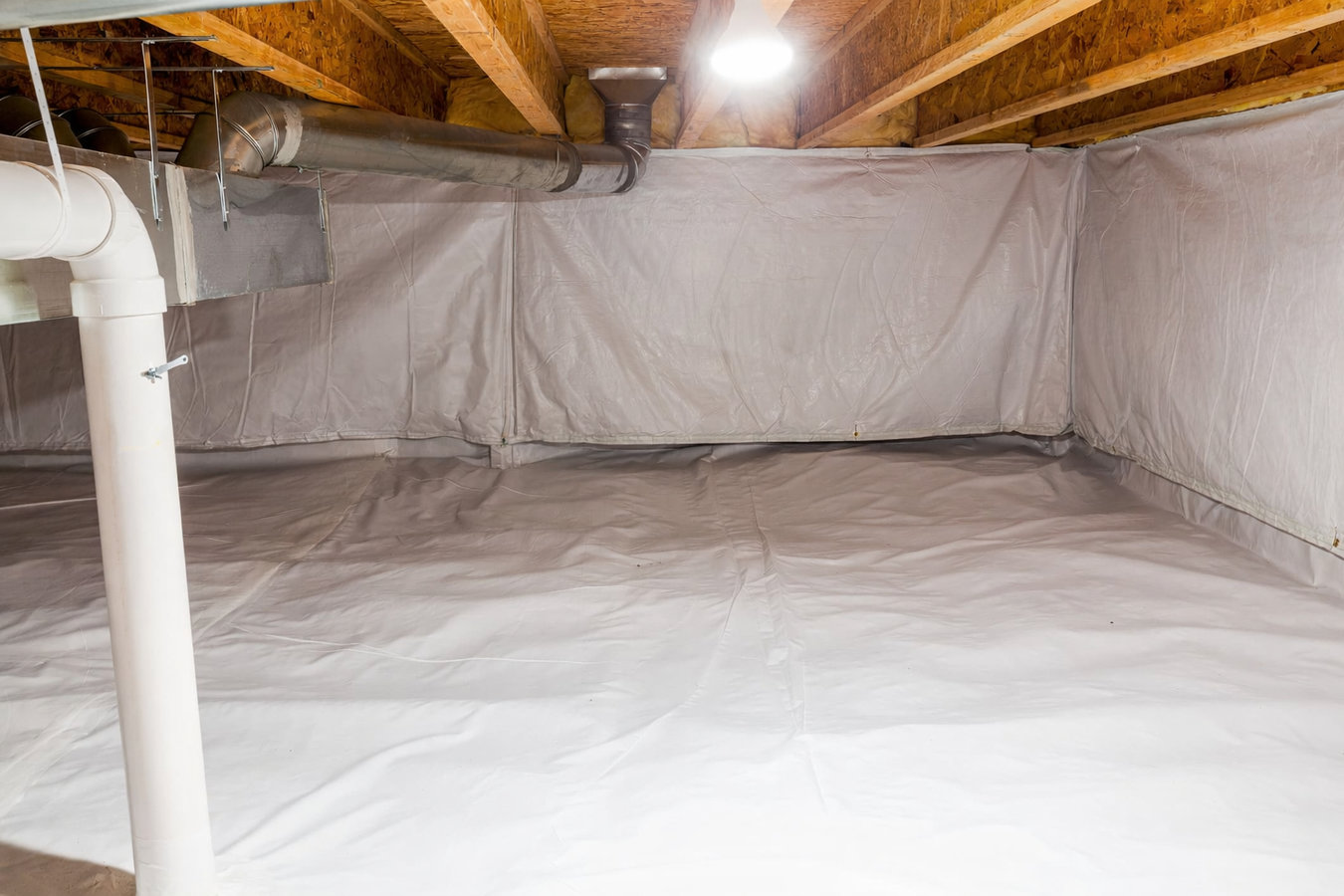
Ground moisture rising through your crawl space drives up your electric bill, damages your floors, and invites pests. We fix that for good.
Crawl space insulation in Tallahassee creates a thermal barrier between the ground beneath your home and your living space, reducing heat gain through your floors and lowering the load on your air conditioning. Most jobs take one to two days, though older homes needing moisture remediation or insulation removal first can run longer. Without it, Tallahassee's humidity migrates up through your floors every summer, softening wood, encouraging mold, and making your first floor harder to cool. Pairing insulation with a crawl space vapor barrier is the most complete fix for the moisture problem most homeowners here are facing.
Many Tallahassee homes built between the 1950s and 1980s have crawl spaces that were never properly addressed. Older vapor barriers, or no barrier at all, combined with decades of Florida humidity often leave homeowners with floors that feel off and energy bills that stay stubbornly high. The good news is that crawl space work has an obvious, felt result: most homeowners notice their floors and their electric bills within the first full cooling season after the job is done.
If you walk barefoot and your floors feel warmer than the rest of the room in July, or noticeably cold in January, the crawl space below is not providing adequate buffer from outdoor temperatures. Tallahassee summers push outdoor temperatures into the low 90s for months, and even mild winters dip into the 30s overnight. Both extremes show up in your floors when the crawl space is unprotected.
A persistent earthy or musty odor near your baseboards or floor vents is often moisture and mold present in the crawl space below. In Tallahassee's climate, this smell worsens after rain events and throughout the June through September rainy season. Candles and air fresheners do not address it because the source is under your floor, not inside your rooms.
If your bill has risen without a clear change in habits or new appliances, a compromised crawl space may be the cause. When insulation is wet, sagging, or missing, your air conditioning fights heat that continuously rises through your floors. In Tallahassee, where AC runs nearly year-round, that extra load shows up every month.
If a pest control company has found termite damage, rodent droppings, or evidence of nesting in your crawl space, the moisture and decaying material that attracted those pests are also destroying your insulation. Tallahassee's warm climate means pest pressure never fully stops, and a damp crawl space is an invitation for new activity once the first problem is cleared.
We install crawl space insulation across all home types in Tallahassee and the surrounding region, and we match the approach to what your home actually needs. For vented crawl spaces, that typically means batt insulation fitted snugly between your floor joists. For homes that benefit from full encapsulation, we install spray foam along the foundation walls and seal the space from outside air entirely. Both approaches are complemented by a crawl space vapor barrier that covers the entire ground surface and blocks ground moisture from rising into the space.
If your existing insulation is wet, moldy, or infested, we remove it before the new material goes in. Installing new insulation over damaged old material is one of the most common shortcuts in this industry, and it ensures the new job fails on the same schedule as the one it replaced. We also pair crawl space work with wall insulation when homeowners are ready to address heat gain from multiple directions at once.
Best for vented crawl spaces where the goal is adding thermal separation between the ground and your living area.
For homes being fully sealed, spray foam on foundation walls handles both heat and moisture more completely than batts alone.
For crawl spaces where old, damaged insulation must come out before anything new can perform properly.
Tallahassee regularly sees relative humidity above 80 percent during summer, with a rainy season from June through September. That moisture does not stay outside. It migrates through the ground and through any gaps in your foundation directly into the crawl space below your floors. Leon County's red clay soil holds water after rain instead of draining quickly, so the ground beneath crawl spaces here stays wet longer than it would in sandier parts of Florida. For homes in lower-lying areas near drainage corridors like Munson Slough or Lake Munson, ground moisture is a near-constant condition. The U.S. Department of Energy estimates that properly insulating and air-sealing your home can reduce heating and cooling costs by up to 15 percent, and in a city with Tallahassee's cooling season, that math matters.
A significant share of Tallahassee's housing stock was built between the 1950s and 1980s, in neighborhoods like Betton Hills, Levy Park, and the Frenchtown area, with crawl space standards far less rigorous than today's. Many of these homes have never had their crawl space properly addressed. We work on homes throughout the Tallahassee area and regularly serve customers in Thomasville, GA, Valdosta, GA, and Gainesville, FL with the same combination of aging homes and persistent ground moisture.
Florida's year-round termite and rodent activity adds another reason to get this right. A damp, poorly insulated crawl space is exactly the environment that draws subterranean termites and rodents looking for nesting material. Fixing the moisture problem does not replace a pest control program, but it removes one of the main conditions that keep bringing pests back.
We respond within 1 business day. We will ask about your home's age, approximate square footage, and what prompted the call. This gives us a realistic sense of what to look for before we arrive.
We physically enter the space, check existing insulation condition, look for moisture damage or mold, and assess whether a vapor barrier is present and intact. You receive a written estimate with a clear scope before any work is scheduled.
We start by removing any damaged old insulation and disposing of it off-site. A vapor barrier goes down first if one is being installed. New insulation follows, with no gaps, sags, or shortcuts. Most jobs are finished in one day; larger or more involved spaces run two.
Before we leave, we walk you through what was done, either in person or with photos so you can see the finished space. We confirm the vapor barrier is fully sealed, insulation is snug, and the access hatch closes properly.
We will inspect your crawl space, show you exactly what we find, and give you a written quote you can compare at your own pace. We respond within 1 business day.
(850) 518-3745We pull permits through Leon County or the City of Tallahassee for every project that requires one. Permitted work means the job is inspected, on record, and protected if you ever sell your home.
We have worked in crawl spaces across Tallahassee's older neighborhoods and newer suburbs. We know what Betton Hills homes look like under the floor joists, and we know what Southwood construction typically needs. That local experience translates directly into accurate estimates and work that is right the first time.
One of the most common frustrations after crawl space work is not knowing whether it was done right, because most homeowners never saw the space before or after. We photograph the crawl space before we start and show you the finished result so you know exactly what you paid for.
We follow Building Performance Institute best practices for moisture control before insulating. In Tallahassee's climate, insulation without addressing moisture is a job that will fail again. We address both in the same visit.
Crawl space work is not visible once it is done, which is exactly why you need a contractor you trust to do it right without being watched. We treat every job the same whether a homeowner is on-site or not, and we back that up with documentation every time.
Pair crawl space work with wall insulation to address heat gain through your home's exterior walls as well.
Learn moreA dedicated vapor barrier is the foundation of any crawl space moisture control plan in Tallahassee's climate.
Learn moreTallahassee's rainy season does not wait. Lock in your installation before the humidity returns and your crawl space spends another summer working against you.