Serving Tallahassee, FL and surrounding areas(850) 518-3745
Tallahassee Insulation is the insulation contractor Havana homeowners call for blown-in insulation, attic upgrades, and air sealing in Gadsden County. Our licensed crew works throughout northeastern Gadsden County and responds to every estimate request within one business day.
Havana sits 16 miles northwest of Tallahassee on US Route 27 in northeastern Gadsden County, a small town of roughly 1,750 residents with a character shaped by two defining chapters in its history. The first was shade tobacco, which made this corner of the Florida Panhandle one of the most economically productive agricultural zones in the state through most of the 20th century. The second was the reinvention of its downtown into one of the most well-known antiques and arts destinations in North Florida, anchored by the Planters Exchange on North Main Street, a National Historic Landmark building housing over 30 vendor shops and the Shade Tobacco Museum.
The residential neighborhoods surrounding the downtown consist primarily of owner-occupied, single-family homes. Many were built in the mid-20th century during the tobacco era and have the construction characteristics typical of that period: wood-frame walls, vented attics, and no meaningful insulation by today's standards. Families who have owned their homes here for decades are often living with energy performance levels that were considered acceptable in the 1960s and 1970s but fall well short of what Florida's current building code requires.
We serve Havana regularly and work throughout the surrounding area. Our crew travels this part of Gadsden County often, including jobs in Quincy to the south and into the unincorporated areas northeast of town. If your home is in this part of the county, scheduling an assessment does not require a long wait.
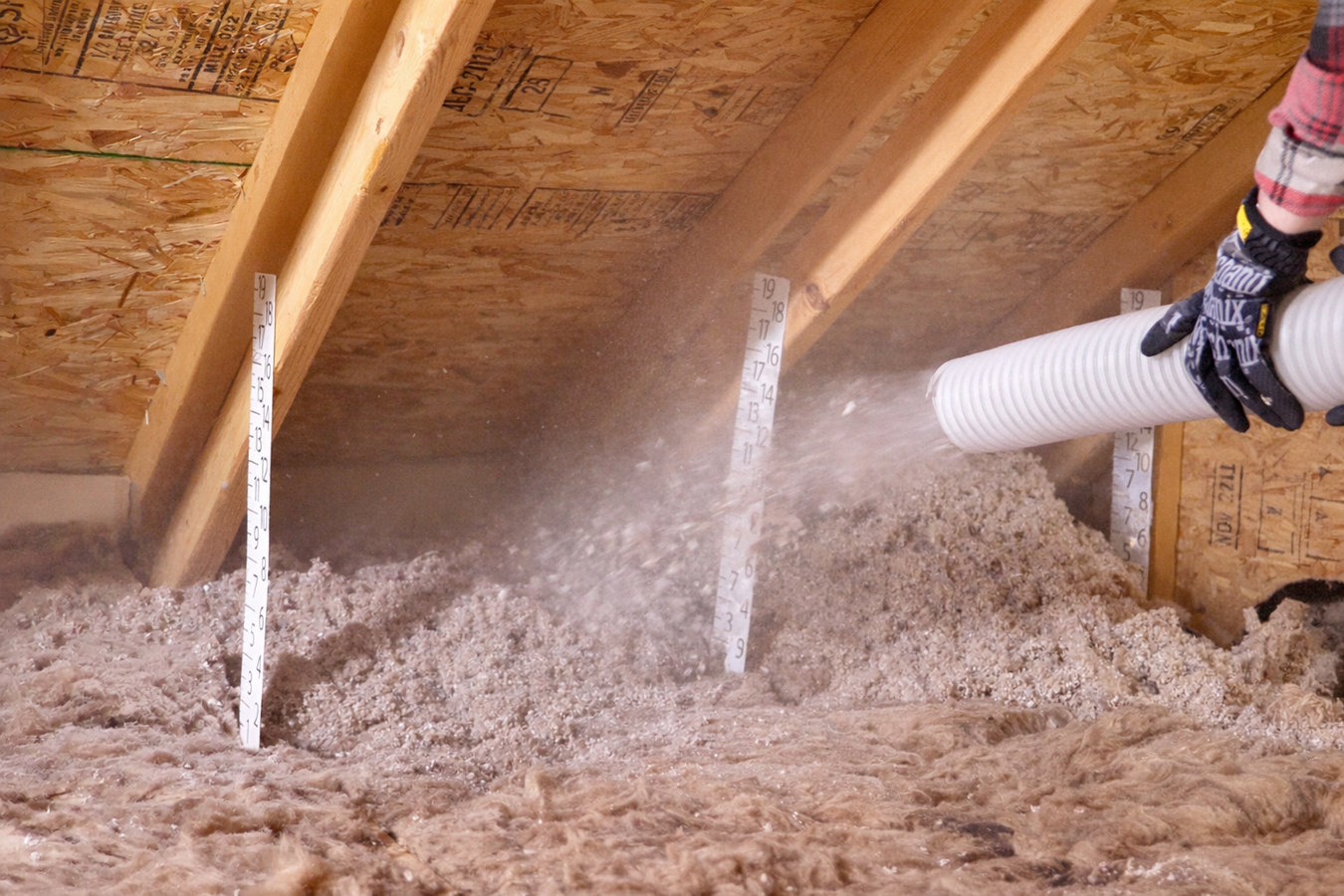
Most of Havana's residential housing stock was built decades before Florida's current R-38 attic requirement. Blown-in insulation fills existing attic cavities and wall voids without demolition, making it the right approach for the town's mid-century homes where the goal is better performance without visible disruption.
In Havana's hot summers, a poorly insulated attic turns into a heat radiator sitting directly above the living space. Upgrading to current R-38 standards is the single most effective step a homeowner in northeastern Gadsden County can take to reduce summer cooling costs.
Older homes in Havana were not built with airtight envelopes, and adding blown-in insulation without sealing the gaps underneath delivers a fraction of the intended benefit. Sealing around top plates, HVAC penetrations, and recessed lights before blowing in the insulation is what makes the project actually work in a humid subtropical climate.
The mid-century homes on Havana's residential streets were built for a different era of energy use. Retrofit insulation upgrades, whether blown-in attic fill or drill-and-fill wall injection, improve these homes significantly without major construction or disruption to the rooms inside.
Quincy is the Gadsden County seat, located south of Havana on US-27. Our crew makes regular trips through this corridor, and Quincy homeowners get the same licensing, the same permitting process, and the same installation standards as every Havana job we complete.
Some of Havana's older homes sit on piers rather than a concrete slab, leaving a vented crawl space that pulls humid ground air up through the floor. Insulating the crawl space floor or encapsulating it entirely stops that moisture pathway and improves the comfort of the rooms above.
The shade tobacco era that defined Havana economically through most of the 20th century also shaped its built environment. The homes constructed for the families who worked that industry were built simply and affordably, often with minimal wall insulation and attic assemblies designed around natural ventilation rather than mechanical cooling. When air conditioning became standard in the 1960s and 1970s, those homes got window units and later central systems, but the thermal envelope stayed largely unchanged. Many Havana homes are still running with insulation decisions that were made 50 or 60 years ago.
The climate here does not forgive that. Havana sits in IECC Climate Zone 2A, which means hot, humid summers with dew points regularly above 70°F. When a home with thin attic insulation runs its air conditioner all afternoon, it is not just working against outdoor heat, it is fighting humidity-laden air that pushes through every gap in the building envelope. That moisture load is what causes mold in attic sheathing, wood rot in framing, and HVAC systems that run nearly continuously but never quite catch up.
Havana also sees occasional winter cold snaps when temperatures drop into the low 30s or upper 20s. A home without adequate insulation in either direction bleeds heat during those nights and struggles to maintain comfort. The right insulation upgrade for a Havana home addresses both seasons: it cuts the summer cooling load and keeps heating costs reasonable during the handful of hard freeze nights each winter brings.
Havana insulation jobs pull permits through the Gadsden County Building Division in Quincy. Havana does not have its own building department, so the permitting process runs through the county office regardless of whether the property is in town or in unincorporated Gadsden County nearby. We know the inspection workflow, what documentation the county expects at close-out, and which project types require a permit versus which do not under the current Florida Building Code.
The older homes along Havana's residential streets, particularly those built in the 1950s through 1970s, present a specific attic geometry challenge: low-pitch roof lines with tight heel heights at the eaves. This means blown-in insulation needs to be installed carefully with proper baffles to preserve the soffit ventilation channel — otherwise the outer bays of the attic get packed solid and the airflow the roof assembly depends on gets cut off. We see this configuration regularly in northeastern Gadsden County and work around it as a matter of routine.
We also work regularly out toward Quincy to the south and east toward Midway along the I-10 and US-27 corridors. Havana sits in the direct path of that route, so scheduling in this part of the county is straightforward.
Call (850) 518-3745 or fill out the estimate form. Every Havana area inquiry gets a response within one business day, and we can usually book the on-site visit within the same week.
We visit your Havana property, measure existing insulation depth, check for moisture or pest damage in the attic, and document what the job requires. The written estimate is itemized with product specs, target R-value, and whether a permit is needed. There is no obligation to proceed.
On installation day, the crew seals attic penetrations first, then installs blown-in insulation to verified depth using physical depth markers placed before blowing begins. Most Havana attic jobs finish in a single day. You do not need to leave your home during the work.
For permitted jobs, the Gadsden County inspector confirms the work meets Florida Building Code. You receive the closed permit, the product coverage chart, and manufacturer documentation. This paperwork is what you need for the federal Section 25C insulation tax credit and for disclosure at resale.
All estimate requests from Havana and northeastern Gadsden County get a response within one business day. The estimate is written, itemized, and carries no obligation. Most jobs can be scheduled within the same week you call.
(850) 518-3745Expanding spray foam seals air gaps and insulates in one application, delivering high R-values for attics, walls, and crawl spaces.
Learn moreProper attic insulation keeps Florida heat from radiating into your living space and helps your HVAC system run more efficiently year-round.
Learn moreLoose-fill blown-in insulation covers irregular spaces evenly, making it an excellent choice for attics and hard-to-reach cavities.
Learn moreWhole-home insulation assessments identify gaps in your thermal envelope so every room stays comfortable regardless of outdoor temperatures.
Learn moreOld or damaged insulation can harbor moisture, pests, and mold. Safe removal clears the way for a fresh, high-performance installation.
Learn moreInsulating the crawl space floor or walls reduces moisture intrusion and improves comfort on the floors above.
Learn moreDense-pack or injection foam wall insulation reduces heat transfer through exterior walls without requiring a full gut renovation.
Learn moreAir sealing closes the gaps that let conditioned air escape and outside air enter, dramatically reducing energy bills.
Learn moreInsulating basement walls or rim joists creates a thermal boundary that keeps lower floors warmer and drier.
Learn moreClosed-cell spray foam provides the highest R-value per inch available, along with a moisture and vapor barrier in one product.
Learn moreOpen-cell foam expands to fill cavities completely, providing excellent sound dampening alongside solid thermal performance.
Learn moreSealing attic bypasses before adding insulation stops stack-effect air movement that undermines even the thickest insulation layers.
Learn moreA heavy-duty vapor barrier installed across the crawl space floor blocks ground moisture from entering your home's structure.
Learn moreProfessional vapor barrier installation protects wall assemblies and crawl spaces from the moisture damage that leads to mold and rot.
Learn moreRetrofit insulation upgrades existing homes without major demolition, improving performance using modern materials and techniques.
Learn moreCommercial insulation solutions for warehouses, office buildings, and industrial facilities, engineered to meet code and reduce operating costs.
Learn moreServing these cities and communities.
Call or fill out the form and a licensed insulation contractor will follow up within one business day.