Serving Tallahassee, FL and surrounding areas(850) 518-3745
Tallahassee Insulationhandles home insulation, spray foam, and crawl space encapsulation for Quincy and Gadsden County properties. We have completed jobs in dozens of the area's historic homes and know what these older buildings need — free estimates returned within one business day.
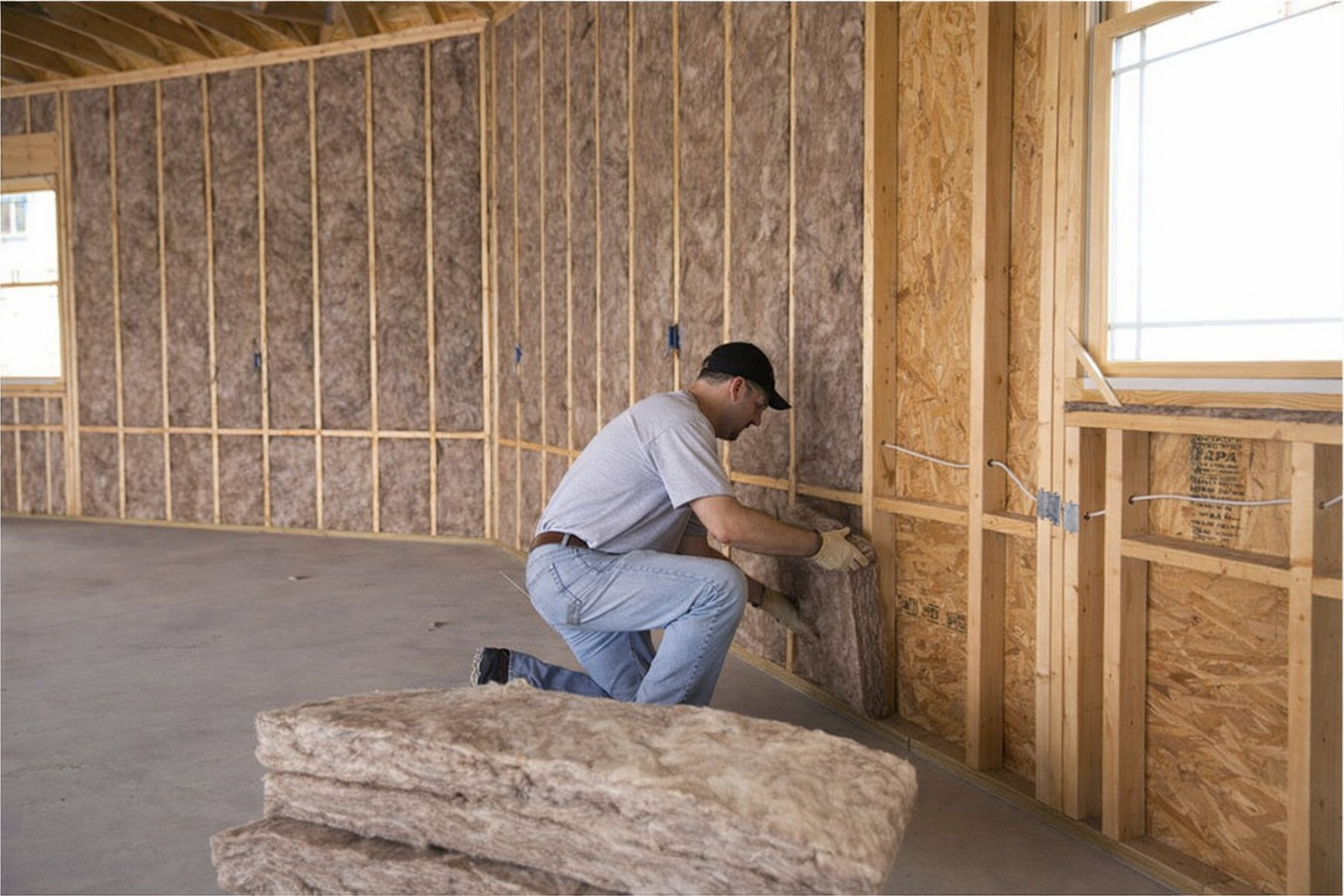
Quincy is 25 miles northwest of Tallahassee along US-90, sitting in the rolling hills of North Florida in a way that feels more like the Deep South than coastal Florida. The city is most widely known for the bank that encouraged residents to buy Coca-Cola stock in the 1920s and never sell — a decision that turned dozens of ordinary Quincy families into millionaires and funded institutions that still operate today, including the Gadsden Arts Center in the restored 1912 Bell and Bates Building on N. Madison Street.
Quincy's 36-block Historic Downtown District contains one of the most intact collections of antebellum and Victorian-era architecture in North Florida, with several properties individually listed on the National Register of Historic Places. Many residents live in structures that are more than a century old — the Gadsden County Courthouse, the 1893 Old Quincy State Bank Building, and scores of residential properties all reflect the city's remarkably preserved built fabric. These older homes present real insulation challenges that newer construction does not.
We serve Quincy along with nearby communities including Midway and Havana throughout Gadsden County. Properties near Pat Thomas Park and Lake Talquin are in our regular service area.
Quincy's housing stock ranges from antebellum structures with minimal original insulation to 1970s ranch houses with degraded fiberglass batts. A whole-home insulation assessment identifies exactly where your building envelope is losing performance, so you get targeted improvements rather than a blanket replacement that misses the real problem areas.
Blown-in cellulose or fiberglass is the most practical choice for adding insulation to Quincy's older homes without opening up walls or ceilings. It fills the irregular cavities common in antebellum and Victorian-era construction evenly, and it can be installed in a single day for most attic applications.
Many of Quincy's older homes sit on raised foundations with open crawl spaces. The terrain west of town toward Lake Talquin stays damp, and an unprotected crawl space in that environment turns into a moisture source that affects the entire first floor. Crawl space insulation combined with vapor barrier installation stops that cycle at the source.
Older Quincy homes were not built with air sealing in mind — gaps around top plates, chimneys, and HVAC penetrations are common. Spray foam seals those openings and insulates simultaneously, and the interior application means the exterior character of a historic-district home stays untouched.
Midway is a short drive from Quincy along I-10, and we serve both communities as part of the same regular route. Midway homeowners get the same crew, the same materials, and the same written estimate process as every Quincy job.
Quincy's summers are just as brutal as Tallahassee's in terms of attic heat gain. Attics in homes built before 1980 frequently fall short of the R-38 minimum required by Florida's current energy code, and that gap shows up directly on your electric bill from June through September.
The homes in Quincy's historic district were built for a different climate strategy — wide porches, high ceilings, and cross-ventilation were the tools available before central air conditioning existed. That design philosophy left these structures with almost no insulation in the walls and minimal protection in the attic. When air conditioning arrived, the buildings kept their original envelopes, and most have operated at a significant energy disadvantage ever since.
Gadsden County's rolling hill terrain means Quincy properties drain differently than flat coastal lots. During heavy summer rains — and Quincy receives roughly 55 inches annually — water saturates the clay-heavy soils quickly and stays near the surface under crawl spaces for extended periods. That standing or slow-draining moisture creates ongoing vapor pressure against the floor assemblies of older homes, accelerating wood deterioration and promoting mold growth where insulation is absent or damaged.
The economic profile of the community matters too. Quincy is a working-class city with a median household income well below the state average. Energy costs hit harder here than in more affluent areas, and a well-insulated home is a meaningful long-term financial benefit for a household watching a tight budget. Upgrading insulation is one of the few home improvements that pays back through reduced bills month after month, which is exactly why it deserves careful, honest work rather than a rushed low-bid job.
We have worked inside enough of Quincy's older homes to know that what looks like a straightforward attic job can turn into a removal project first — original wood-wool or early fiberglass batts from the 1940s and 1950s are still in many attics here, and they need to come out before anything effective can go in. We factor that assessment into every quote upfront so there are no surprise costs once the job starts.
The Gadsden County Courthouse area and the blocks along N. Madison Street have some of the most challenging structures we encounter — tall ceiling planes, irregular joist layouts, and historic plaster walls that you cannot puncture without a careful plan. These jobs take longer, and we price them honestly because rushing them creates problems that outlast the savings.
We regularly travel US-90 between Quincy and Tallahassee and handle jobs in Chattahoochee to the west along the Apalachicola River corridor. If your address is somewhere between those two points, we can get there without a travel surcharge.
Call or submit the online form around the clock. For Quincy and Gadsden County inquiries, we follow up within one business day — often the same afternoon.
We visit your property, inspect the attic, crawl space, and accessible walls, and document what we find. For historic homes, we note any access constraints upfront. You get a written quote that covers materials, R-values, labor, and whether old insulation removal is needed — no hidden line items after you sign.
Work requiring a building permit through the City of Quincy or Gadsden County is handled by our team. We file the application, coordinate the inspection schedule, and notify you of the timeline before any work begins.
Most Quincy jobs wrap in one day. We clean up fully, walk through the finished work with you, and leave written documentation of installed materials and achieved R-values — worth keeping for future insurance renewals or when you sell the property.
Whether your home is a century-old Victorian on the historic district or a 1980s ranch near Lake Talquin, we will assess it accurately and give you a straight answer about what it needs. No obligation, and you will hear from us within one business day.
(850) 518-3745Expanding spray foam seals air gaps and insulates in one application, delivering high R-values for attics, walls, and crawl spaces.
Learn moreProper attic insulation keeps Florida heat from radiating into your living space and helps your HVAC system run more efficiently year-round.
Learn moreLoose-fill blown-in insulation covers irregular spaces evenly, making it an excellent choice for attics and hard-to-reach cavities.
Learn moreWhole-home insulation assessments identify gaps in your thermal envelope so every room stays comfortable regardless of outdoor temperatures.
Learn moreOld or damaged insulation can harbor moisture, pests, and mold. Safe removal clears the way for a fresh, high-performance installation.
Learn moreInsulating the crawl space floor or walls reduces moisture intrusion and improves comfort on the floors above.
Learn moreDense-pack or injection foam wall insulation reduces heat transfer through exterior walls without requiring a full gut renovation.
Learn moreAir sealing closes the gaps that let conditioned air escape and outside air enter, dramatically reducing energy bills.
Learn moreInsulating basement walls or rim joists creates a thermal boundary that keeps lower floors warmer and drier.
Learn moreClosed-cell spray foam provides the highest R-value per inch available, along with a moisture and vapor barrier in one product.
Learn moreOpen-cell foam expands to fill cavities completely, providing excellent sound dampening alongside solid thermal performance.
Learn moreSealing attic bypasses before adding insulation stops stack-effect air movement that undermines even the thickest insulation layers.
Learn moreA heavy-duty vapor barrier installed across the crawl space floor blocks ground moisture from entering your home's structure.
Learn moreProfessional vapor barrier installation protects wall assemblies and crawl spaces from the moisture damage that leads to mold and rot.
Learn moreRetrofit insulation upgrades existing homes without major demolition, improving performance using modern materials and techniques.
Learn moreCommercial insulation solutions for warehouses, office buildings, and industrial facilities, engineered to meet code and reduce operating costs.
Learn moreServing these cities and communities.
Older homes cost more to heat and cool than they have to. A proper insulation upgrade can change that — schedule your free assessment and find out exactly what your home needs.